
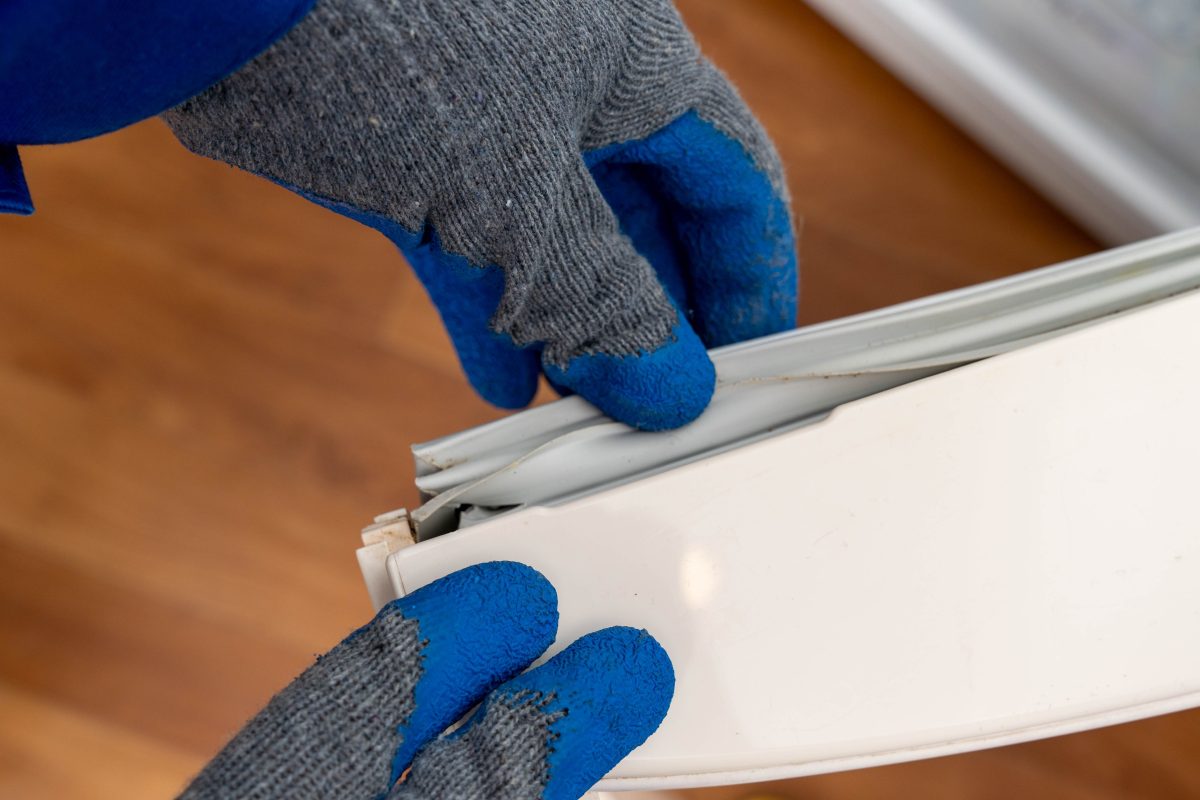
Fridge seal repair is sometimes possible, but it is rarely the best long-term solution, especially in commercial environments. Quick fixes can help temporarily, but they often lead to higher energy costs, poor refrigeration performance, compliance risks, and repeat issues. In most cases, replacing the seal is faster, more reliable, and more cost-effective.
This guide explains when fridge seal repair might work, when it will not, and why most businesses choose replacement instead.
What is fridge seal repair and when is it considered?
Fridge seal repair refers to attempts to fix a damaged, loose, or worn door gasket rather than replacing it entirely. This might involve:
- Cleaning and reshaping the seal
- Using heat to restore flexibility
- Reattaching loose sections
- Applying adhesive or sealant
These approaches are usually considered when a seal has only minor issues, such as slight warping or dirt build-up.
However, the most important thing to understand is this: a fridge seal is a functional component, not a cosmetic one.
It directly impacts:
- Temperature control
- Energy efficiency
- Food safety compliance in commercial kitchens
- Equipment lifespan
Can a fridge seal actually be repaired?
In short, you can sometimes repair you fridge seal, but rarely properly or suitably for it to be long term fix.
You can attempt fridge seal repair in certain situations, but it depends on the condition of the gasket.
Situations where a fridge seal repair might work temporarily
- The seal has hardened slightly but is not cracked
- It has come loose in one corner
- There is dirt or debris preventing a proper seal
In these cases, simple fixes like cleaning the seal can restore some performance. Regular maintenance plays a big role here, particularly if you are already following routines like proper seal cleaning
Situations where a fridge seal repair will not work
- Cracks or splits in the rubber
- Loss of magnetism
- Significant warping or shrinkage
- Seals that no longer seal properly
At this point, any attempt at fridge seal repair becomes a short-term workaround rather than a solution.
This is where many businesses run into issues. What seems like a quick fix can lead to bigger operational risks, particularly those linked to hygiene, downtime, and compliance
Why fridge seal repair is rarely the right choice for commercial use

In domestic settings, a temporary repair might be acceptable. In commercial environments with heavy usage, where compliance and food hygiene are non-negotiable, and margins matter, it is a different story.
1. Energy costs increase quickly
A poor seal means your fridge is constantly working harder. Even a small gap can significantly increase energy consumption.
If you are already seeing rising costs, it is worth understanding how seals directly impact efficiency in commercial kitchens.
2. Food safety risks increase
Damaged or faulty fridge seals can directly affect temperature control and overall performance. Issues like freezers icing up or water pooling inside the unit are often caused by temperature fluctuations, which can quickly become a compliance concern during inspections.
If you are operating to food safety standards, seal condition is typically checked as part of routine inspections, as outlined in our food safety inspection guidance and checklist.
3. Repairs fail at the worst time
A common mistake is relying on a “temporary fix” during busy periods.
In reality, this often leads to:
- Fridge downtime during service
- Emergency callouts
- Lost stock or spoilage
These are common challenges in commercial environments where maintenance is already stretched. If you know this experience too well, check out our guide for commercial fridge maintenance.
4. It creates repeat work
Repairing a seal rarely fixes the underlying issue. You are likely to revisit the same problem again within weeks or months.
Replacing the seal once is usually more efficient than repeated repairs costing both time and money.
Fridge seal repair vs replacement: what is the better option?
In commercial kitchens, replacing your seals regularly is almost always the better option over fridge seal repairs. Here’s a comparison of the two side by side:
| Factor | Repair | Replacement |
|---|---|---|
| Cost (short-term) | Lower | Slightly higher |
| Cost (long-term) | Higher due to repeat fixes | Lower overall |
| Reliability | Low | High |
| Compliance | Risky | Secure |
| Downtime | Unpredictable | Minimal |
If you are weighing up cost, it helps to understand the full picture. In many cases, the cost of replacing your fridge seals pays for itself quickly when you factor in energy savings and avoided downtime.
Can you replace fridge seals yourself?
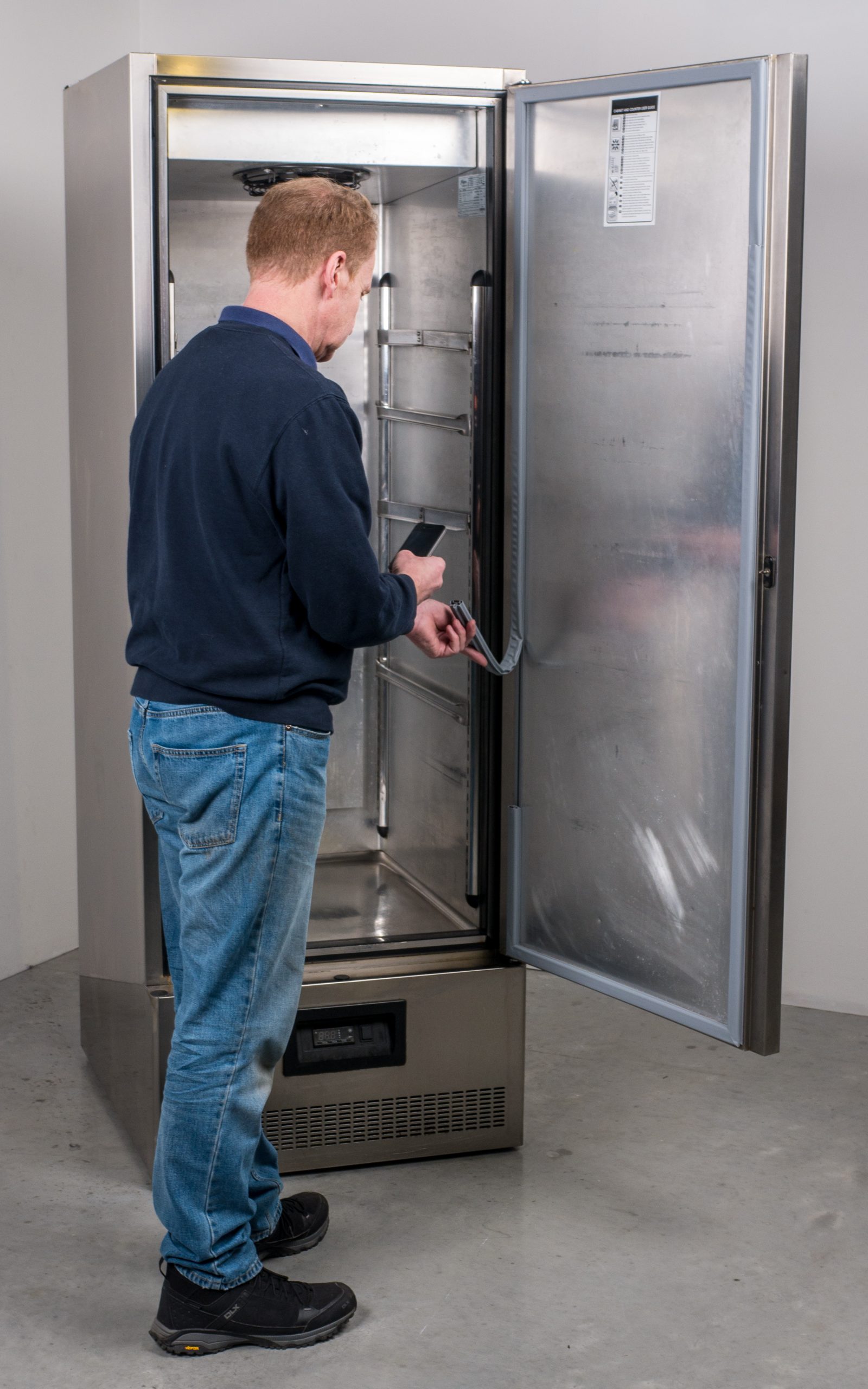
Much to the surprise of many, replacing a fridge seal is straightforward and can usually be done without the need for an engineer. This means you can avoid additional labour costs and resolve issues quickly by opting to replace rather than repair.
Most commercial fridge seals, including those supplied by The Seal Company, are designed for simple, on-site installation. That means:
- No need for an engineer
- Minimal downtime
- Straightforward fitting process
The key is getting the correct seal first time. That usually comes down to accurate measurement and identification, particularly when dealing with different models or profiles.
For older or less common units, an exact match becomes even more important. In these cases, a made-to-measure seal is often the most reliable option, ensuring a proper fit and avoiding the issues that come with using a near match. The process is still simple and designed to be handled on-site. You can see how this works in our guide on how to order a bespoke seal.
Why businesses move away from repair altogether
Across commercial businesses like hospitality groups, facilities teams, and service engineers, the trend is clear:
Repair is reactive. Replacement is proactive.
Instead of waiting for seals to fail, many businesses now:
- Replace seals as part of planned maintenance
- Keep records of models and profiles
- Standardise ordering across sites
- Use fast turnaround suppliers to minimise disruption
The shift here is not just about changing approach, but making that approach easier to manage day-to-day.
Having the right support in place removes the usual friction, whether that is identifying the correct seal, avoiding ordering mistakes, or getting replacements delivered quickly enough to prevent downtime. With the right setup, replacing seals becomes a routine task rather than a last-minute problem.
This becomes especially important at scale, where managing seal replacement across multiple locations needs structure and consistency.
The most common mistake with fridge seal repair
The most common mistake is assuming the seal is “good enough”. Signs like slight gaps, reduced suction, or minor damage are often ignored until they become serious problems.
If you have noticed:
- Condensation or water inside the fridge
- Doors not closing properly
- Increased running noise
- Increased running costs
- Unstable or incorrect fridge temperature
- Visible wear or splitting
These are early indicators that replacement is the smarter option. In many cases, issues like water inside the fridge and units freezing up are not caused by the appliance itself but by failing seals that allow warm air in.
A more practical approach: replace before it becomes a problem
For commercial users, the most effective approach is simple:
- Inspect seals regularly
- Replace them before failure
- Standardise your process
This avoids:
- Emergency downtime
- Failed inspections
- Unexpected costs
And with reliable supply options, replacement is faster than ever. Many businesses now rely on:
- Next-day delivery to minimise disruption
- OEM-quality seals for correct fit first time
- Support with identification and measurement
- Sample matching for bespoke profiles
At The Seal Company, this is exactly how we support our customers day-to-day. Whether it is helping you identify the correct seal, avoiding costly ordering mistakes, or getting a replacement out quickly, the focus is on making the process simple and reliable.
This removes the friction that previously made repair seem like the easier option and helps shift from reactive fixes to planned, reliable maintenance.
Final thoughts
Fridge seal repair might seem like the quickest fix, but in commercial environments, it is rarely the right one.
The most effective approach is to replace seals before they become a problem, keeping your equipment efficient, compliant, and reliable without the stress of reactive maintenance.
If you are reviewing your current setup or looking for a replacement, it is worth exploring our extensive range of seal profiles, covering leading brands such as Williams, Foster and Gram, as well as bespoke solutions for older or specialist units or simply when the model or part number is not known. Having access to the right seal, quickly and accurately, makes all the difference.
If you are unsure what you need, or want to simplify how you manage seal replacements across your business, our friendly team is always on hand to help you find the right solution.
FAQs
Are all fridge seals universal?
No. Fridge seals are specific to the make, model, and profile of your unit.
Will superglue or sealant fix a fridge seal?
It may hold temporarily, but it is not a reliable or food-safe long-term solution.
Why has my fridge door lost suction?
This is usually due to wear, dirt build-up, or deformation in the seal.
How long does it take to replace a fridge seal?
In most cases, it can be done in minutes with the correct seal.
Is it worth fixing a leaking fridge seal?
In most cases, no. Replacement is the more reliable and cost-effective solution.