

If you’re wondering why there is water in the bottom of your fridge, you’re not alone. This is one of the most common refrigerator issues, and the reason usually comes down to a few key causes. In this article, we’ll explain why water collects in your fridge, what you can do to fix it, and how to prevent it from happening again.
In short, the reason water builds up in your fridge is usually linked to condensation, blockages, or faulty components. We’ll guide you through the most frequent causes and step-by-step solutions.
Common Causes of Water at the Bottom of Your Fridge
Quick Fix Summary
If you’ve just spotted water in your fridge and want a fast way to pinpoint the issue, here’s what to check first and quick solutions:
If you’ve just noticed water in your fridge, here are five likely causes and quick solutions:
- Blocked defrost drain – The most common culprit. Check for clogs and clear with warm water or a pipe cleaner.
- Damaged door seal – Cracked or loose seals let in warm air, causing condensation. Clean or replace if needed.
- Wrong temperature setting – Keep your fridge at around 4°C to prevent ice build-up and excess moisture.
- Leaky water filter or dispenser line – Check for leaks in fridges with built-in dispensers or ice makers.
- Humidity build-up – Let hot food cool before storing and avoid overpacking to improve airflow.
Now let’s explore each in more detail, from why it occurs to exactly how to try and fix it.
1. Blocked Defrost Drain (Most Common Cause)
One of the leading reasons for water pooling in your fridge is a blocked defrost drain. This small drain hole (usually at the back of your fridge or under the salad drawers) can get clogged with food debris, grease, or ice.
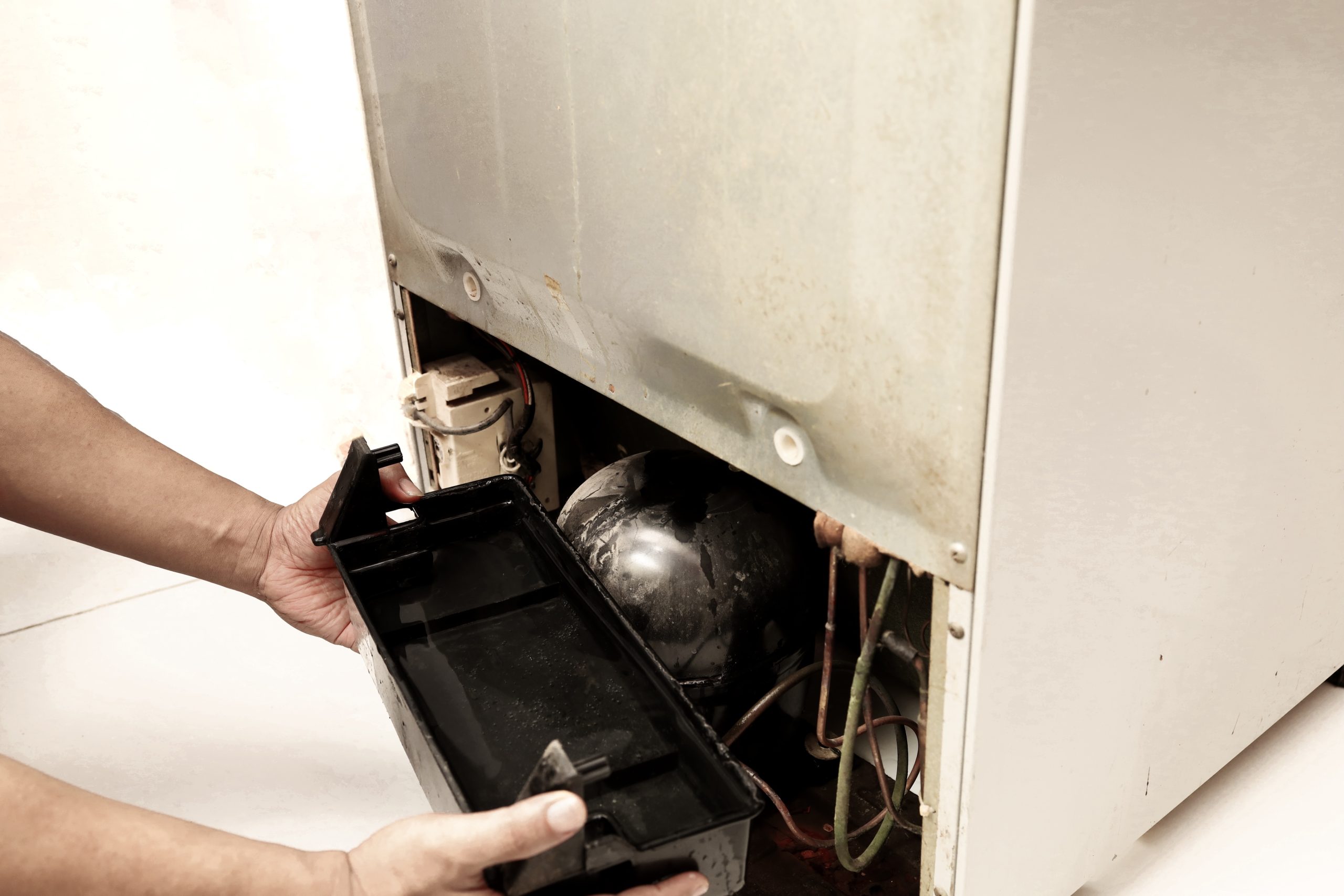
- Problem: Melted ice from the defrost cycle can’t drain correctly, causing water to collect at the bottom of your fridge.
- Solution: Locate the drain hole and gently unblock it using a cotton bud, pipe cleaner, or warm water. If there is an ice build-up, it’s best to let the drain hole defrost naturally to avoid any damage to components.
- Prevention Tip: Clean the drain hole regularly to stop future blockages.
To avoid ice build-up occurring again in the future, check out our guide on how to stop ice build-up in your fridge freezer.
2. Damaged or Dirty Fridge Door Seal
The second likely cause is a worn or dirty fridge door seal. A damaged or dirty fridge door seal allows room temperature air to enter, creating condensation in your fridge and water build-up.
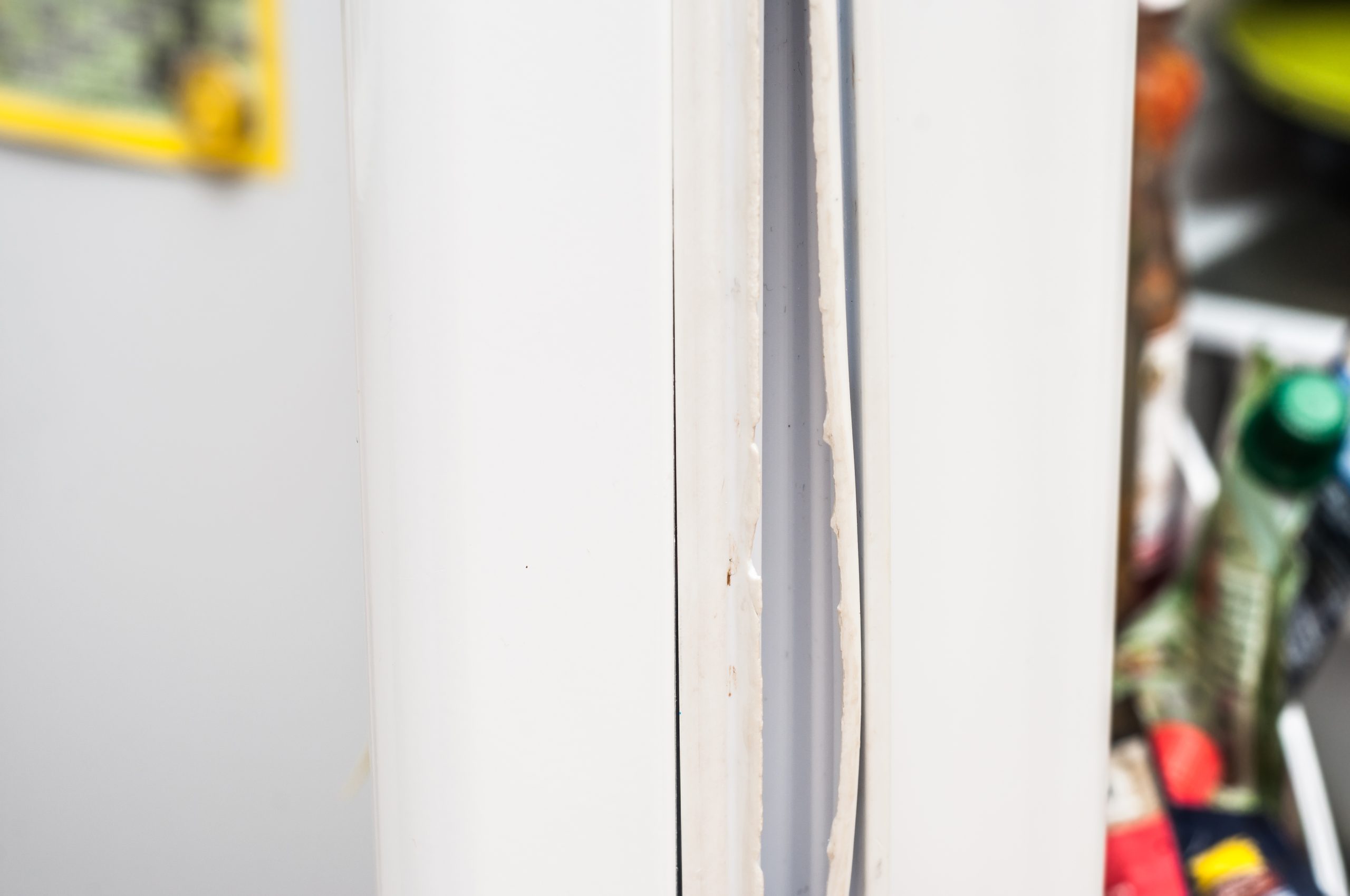
- Problem: If the door seals don’t seal properly, warm air causes moisture inside.
- Solution: Check for cracks, dirt, or gaps. Clean the fridge door seal with mild soap and water, and if it’s damaged, it’s time to replace the door seal.
- Prevention Tip: Always ensure the fridge door is fully closed.
How to Know If You Need a New Fridge Seal
A faulty seal is a major cause of condensation and leaks. Here’s how to spot a problem:
- The seal looks cracked, brittle, warped, or discoloured
- You see persistent moisture or mould around the fridge seal
- The door doesn’t seem to close fully or feels loose
- Paper test: shut the fridge door on a sheet of paper, if it slides out easily, the seal may not be doing its job
3. Incorrect Fridge Temperature Settings
If your fridge temperature isn’t the correct temperature, it is either too high or too low, which can lead to excess condensation.
- Problem: Incorrect temperature settings can cause the fridge to overwork or underperform, resulting in poor refrigerator efficiency.
- Solution: Set your fridge to around 4°C (39°F). Check regularly with a thermometer.
- Prevention Tip: Avoid leaving the door open for long periods.
4. Faulty Water Filter or Dispenser Line
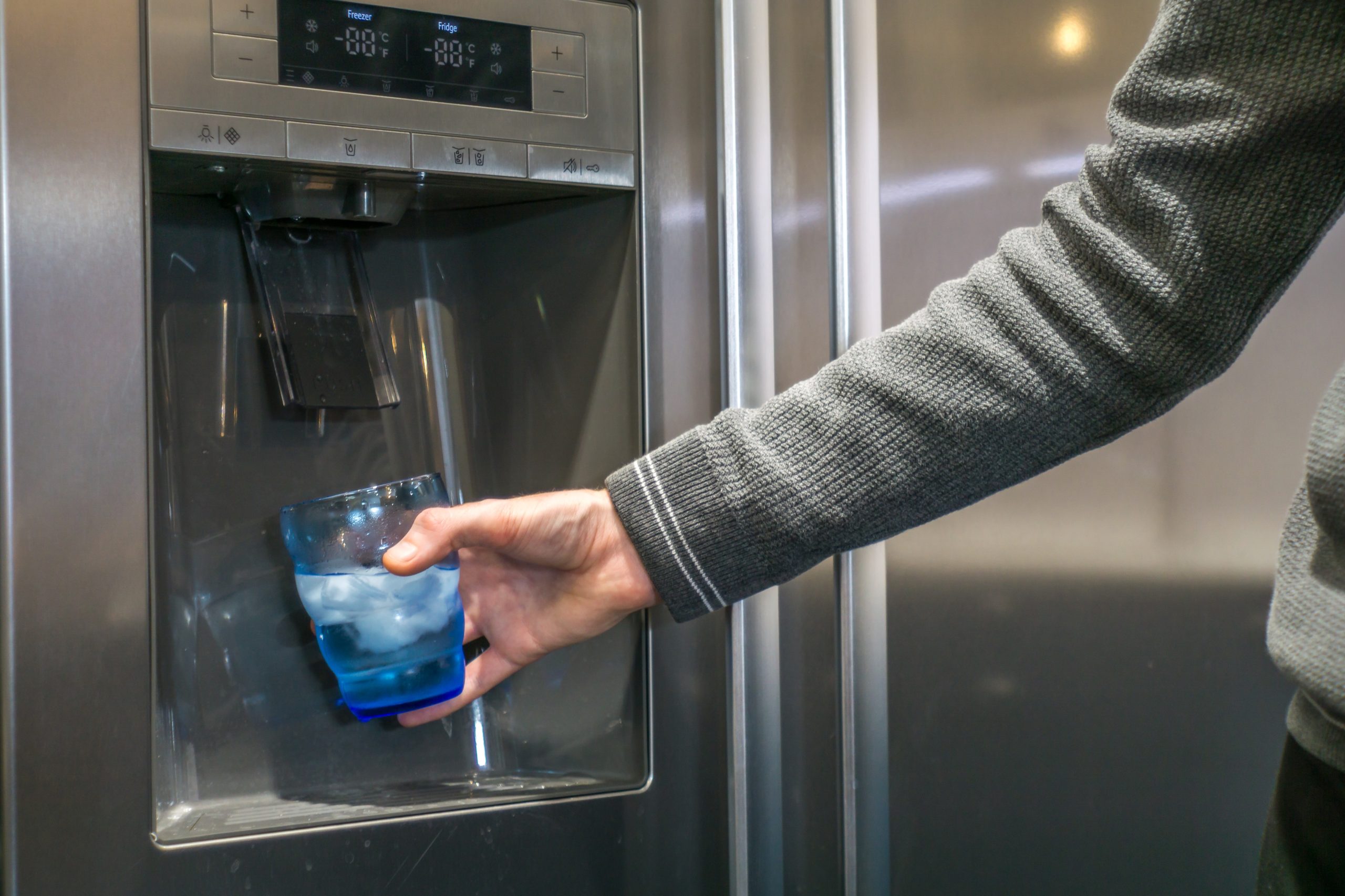
Many modern, domestic fridges have built-in water dispensers or ice makers. These are very popular thanks to their convenient supply of perfect chilled or ice cubes at any time. However, leaks can stem from these systems, which may be the cause of water in your fridge.
- Problem: Blocked or leaking water dispenser lines can cause water pooling.
- Solution: Inspect the water line for blockages, ice, or damage. Replace the filter as recommended.
- Prevention Tip: Regularly maintain filters and lines.
5. Humidity and Condensation
Even when your fridge is working properly, the environment inside can contribute to excess moisture. If you’re noticing droplets forming on shelves, drawers, or the interior walls, several factors could be at play. Humidity, poor air circulation, and even storing hot food without letting it cool can introduce extra moisture into your fridge. Warm items release steam that condenses once cooled, leading to water droplets inside.
- Problem: High humidity, poor air circulation, or placing hot food in the fridge can cause excess condensation in your fridge.
- Solution: Let hot food cool before refrigerating, keep food containers sealed, and avoid overpacking shelves to allow proper airflow.
- Prevention Tip: Start by ensuring the fridge temperature is correctly set (around 4°C). Keep the door closed as much as possible, let hot food cool before storing, and avoid overfilling the shelves to allow proper airflow. If you’ve covered all these areas, use your fridges humidity settings to try and correct things if available.
Damaged door seals can also allow humid air to enter, so inspect and replace the seals if necessary.
Additional Support for Fridge Water Issues
Quick Visual Checklist: What to Check First
So now you know all the possible likely causes, if you’ve just discovered water in your fridge, run through this simple checklist to narrow down the exact cause of your issue before getting started on a fix:
- Look under the salad drawers for pooling or ice
- Locate and inspect the defrost drain for clogs
- Feel around the door seal for cracks, gaps, or mould
- Use a thermometer to check if the fridge is around 4°C
- Check for water near the filter or dispenser tubing
When to Call a Professional
Tried everything and still finding puddles? Some problems go beyond DIY fixes:
- Internal tubing or drain pan faults
- Broken defrost timer or thermostat
- Recurring leaks from built-in dispensers
If water keeps appearing after cleaning and basic checks, it might be time to contact a refrigeration technician for a deeper inspection.
Conclusion
Preventing water from accumulating in your fridge often comes down to regular maintenance and a few simple checks: keep the drain clear, ensure the door seals are functioning properly, store food correctly, and set the correct temperature. Tackling these issues early not only keeps your fridge dry and hygienic but it can also extend its lifespan and improve energy efficiency.
If you suspect your fridge door seal is the culprit or just want peace of mind, we’re here to help. Browse our bespoke fridge door seals or hundreds of branded seals from popular brands including Williams, Polar and Foster (to name a few!) Alternatively, get in touch, we’ll guide you to the right replacement for your model, so you can get back to a fridge that works exactly as it should.
For a complete guide on how to install your new seal with ease, read our guide on changing your fridge door seal, complete with step-by-step instructions, graphics, and videos.
Frequently Asked Questions
Why is there water under my salad drawers?
This is usually due to a blocked defrost drain. Check and clear the drain hole under the drawers.
Why is there water in my fridge shelf?
Water collecting on your fridge shelves is usually caused by excess condensation. This can happen if you’re storing hot food, if the door seal is damaged, or if the fridge is overfilled, preventing proper air circulation. Another possible cause is water dripping from above due to a blocked defrost drain; the meltwater can’t exit properly and ends up spreading across internal surfaces, including shelves.
Can I use a hairdryer to clear a blocked drain?
It’s safer to use warm water or let the fridge defrost naturally to prevent damage to its components. If there’s debris or dirt clearly blocking the drain, try gently unblocking it using a cotton bud or pipe cleaner, being very cautious not to cause further blockage or damage the components.