

For any cold room or cold store freezer, the integrity of your door gaskets is essential for both efficiency and regulatory compliance. The door seal, or gasket, might not get much attention, but it’s one of the most important parts of your refrigerator unit. This flexible strip keeps cold air in and warm air out, helping your fridge run efficiently and your food stay fresh for longer.
When it’s worn or damaged, the refrigerated storage space has to work harder to maintain the right temperature, which can waste energy and affect food quality. Environmental Health Officers also routinely check the state of cold store door seals during inspections, and damaged or neglected gaskets are a common cause of failure.
So, keeping your door gaskets in good shape really does matter.
In this guide, we’ll walk you through how to order a bespoke rubber gasket quickly and easily.
Unsure what a bespoke gasket is? Learn everything about bespoke gaskets and their benefits.
How to Order Bespoke Rubber Gaskets for Your Fridge/Freezer
Ordering a bespoke rubber profile seal for your commercial refrigeration unit on our website is quick and easy.
It involves the following steps:
- Identify
- Measure
- Order
Let’s get to it!
Step 1: Identify Your Gasket
There are two options to identify your gasket.
Option A: Use the Model Number
First, try to identify your unit using your original seal.
If you know your model number, you may use it to skip ahead and go straight to ordering here.
If you don’t know the model number, follow the instructions below:
- Locate the Identification Plate: Look for the appliance’s identification plate, usually found inside the door frame, on the side of the cabinet, or on the back.
- Verify Details: Double-check that you have the correct Brand Name and Full Model Number. You may be able to proceed directly to ordering using this information.
Option B: Identify the Seal Profile (If Model Number Fails)
If you cannot find the identification plate or do not get a match, you need to determine the cross-section of your existing seal.
- Cut the Seal: To clearly see the cross-section view, you will need to cut your seal. This reveals the profile shape, which is essential for matching it correctly.
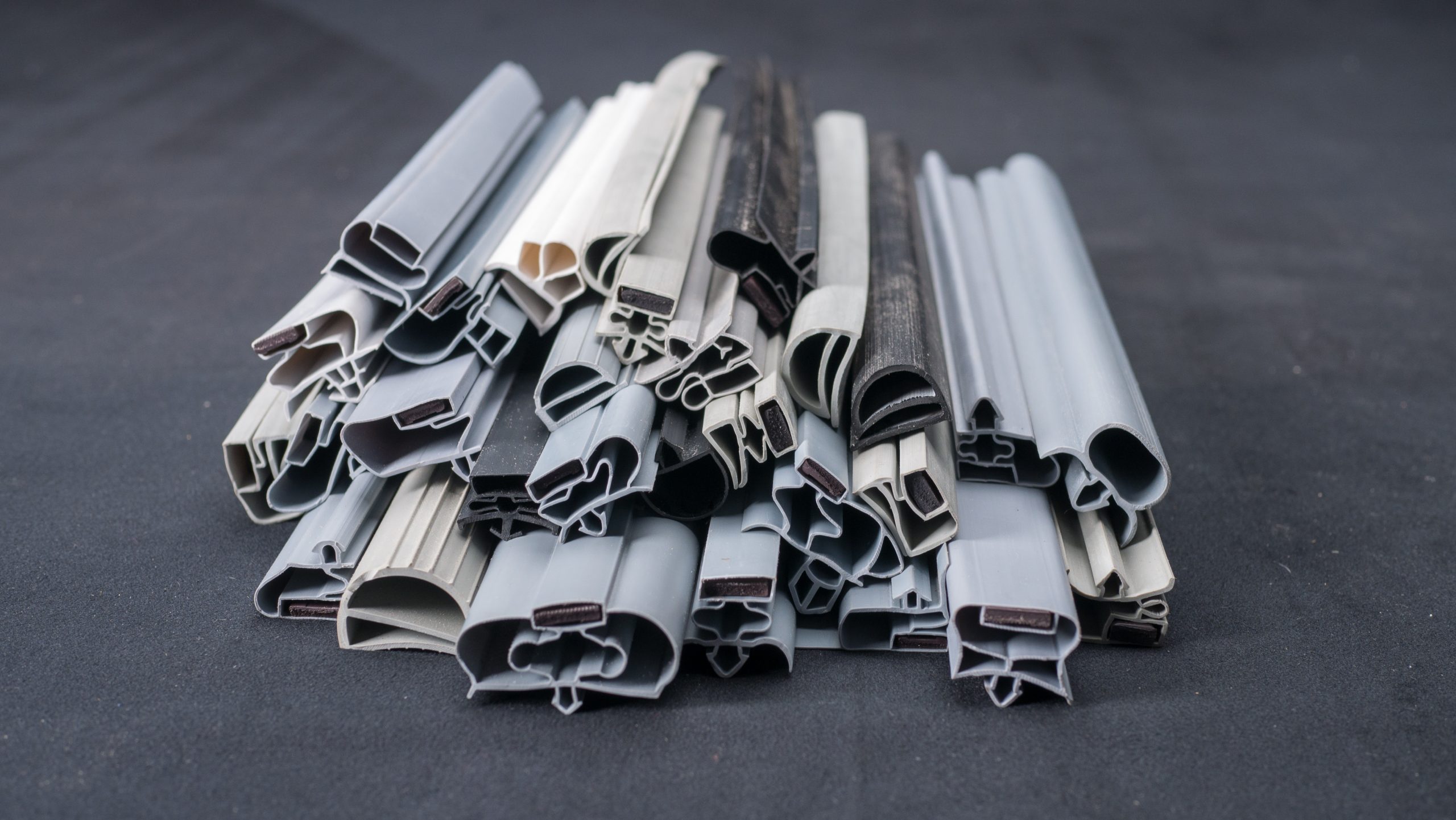
- Match the Profile: Compare the cut cross-section to the profiles available in the company’s bespoke seal Profile Overview.
For extra help, watch our step-by-step video on how to identify your gasket.
Step 2: Measure Your Rubber Fridge Gasket
Take accurate measurements in millimetres (mm).
Outside-to-Outside (Outside Edges) Measurement
For rubber seals, which are sold by the metre, you will need to measure the door’s dimensions to calculate the total perimeter.
- Measure Width: Take a tape measure and measure the width of the door from one outside edge to the other. Record this accurate measurement in millimetres.
- Measure Height: Repeat the process, measuring the height of the door from the outside edge at the bottom to the outside edge at the top and record this measurement.
- Calculate Perimeter: To calculate the perimeter, add the height and width (e.g. 1400mm high × 600mm wide), then multiply the sum by two. This will give you the total perimeter in millimetres, which can then be converted to metres to determine how much profile is required.
- Record: Note down both the height and width measurements in millimetres, and state that these are door measurements for calculating the total perimeter.
Need help measuring your seal? Watch this short explainer video.
Step 3: Obtain a Quote or Place an Order
Once you have the measurements, you can proceed to:
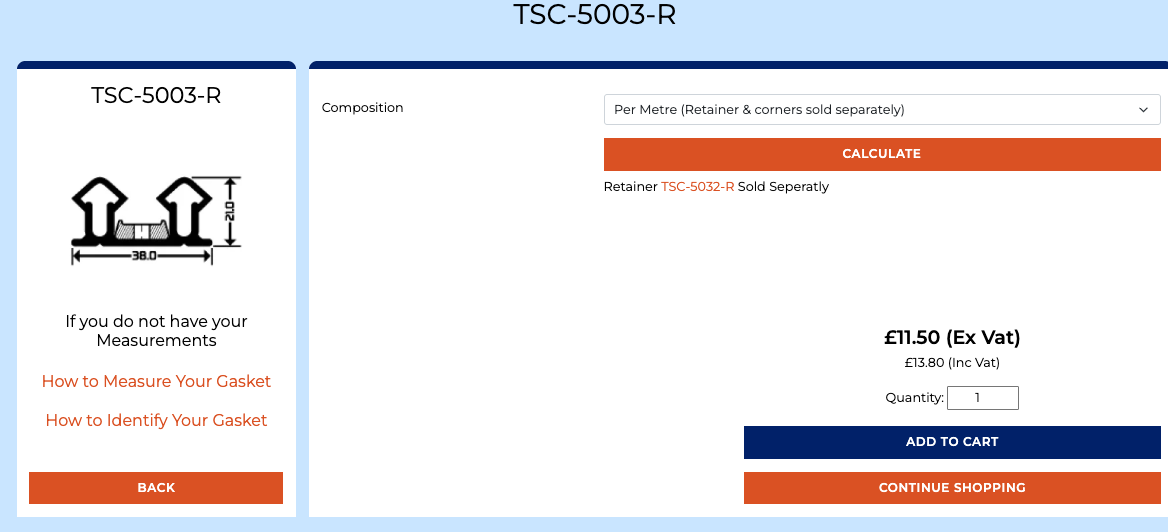
- Input Details: If you already know which profile type you have, for example, TSC-5003-R, simply type it into our search bar. Alternatively, select the right seal profile on the company’s Profile Overview section after checking the cross-section (as previously explained).
- Order: Use your profile and measurement details to place your order from the Profile Overview. Please note that retainers and corners are sold separately.
- Contact us if you have any doubts about your selection or need help with installation.
While you’re ordering your bespoke rubber gaskets, don’t forget the door blades and sweepers for optimal efficiency and integrity of your commercial refrigeration unit.
A sweeper or blade is used along the bottom edge to complete and secure the seal. Our aluminium and rubber door sweeper is designed to block dust, moisture, and wind from passing beneath the door. The rubber sweep strip is built to last, offering strong resistance to weather and UV rays.
What are Bespoke Rubber Fridge Gaskets?
Bespoke rubber fridge gaskets from The Seal Company are a durable, versatile sealing solution for commercial fridges and freezers. They are primarily used in large walk-in cold rooms and cold store freezers.
While these profiles generally require a plastic retainer to hold them in place, their main difference from our other PVC profiles (like Dart or Flap) is how they’re sold: our bespoke rubber gaskets are measured and sold by the metre, rather than as fully welded, made-to-measure seals.
Bespoke fridge gaskets are replacement seals made to match the original equipment manufacturer (OEM) profiles. Bespoke seals are not different in quality or material from branded seals. In fact, The Seal Company specialises in manufacturing seal replacements that guarantee OEM quality or better, ensuring a precise and perfect fit for your specific fridge model.
Door seals are made from different materials; however, the most common gasket materials are made from PVC, silicone, EPDM, or neoprene. Our rubber profiles are made from EPDM (Ethylene Propylene Diene Monomer), a synthetic rubber with good low-temperature and elastic properties.
In commercial refrigeration, materials can vary even more: silicone, SBR, neoprene, and Viton are all common choices.
But for now, let’s focus on the rubber fridge gaskets.
Are Rubber Seals Better Than Other Types of Seals?
Rubber seals are typically used for cold rooms and cold store freezers.
They are considered the gold standard for door gaskets, and for good reason. Their performance comes down to a few key advantages:
The Benefits of Rubber Profiles
Flexibility and Fit
Rubber naturally compresses and moulds to the contours of a fridge or freezer door, even when the surface isn’t perfectly even. This flexibility ensures a tight, consistent seal every time the door closes.
Durability
High-quality rubber profiles, like the ones we manufacture, are made to last. They can handle constant use, wide temperature swings, and the wear and tear of busy environments, especially in commercial kitchens or food service settings.
Sealing Efficiency
Because they’re designed specifically for refrigeration, rubber gaskets outperform other materials in maintaining cold temperatures and fridge efficiency even in commercial kitchens.
Replacing Your Rubber Fridge Seal: Easy, Fast, and DIY
Replacing a worn-out rubber fridge or freezer gasket is easy and cost-effective. Whether you’re dealing with a home refrigerator or a large commercial unit, the process is simple: you can usually replace a fridge seal in under 3 minutes!
There’s no need to call expensive professional fridge seal replacement services or incur unnecessary costs. We also offer a complete guide to replacing fridge magnetic seals yourself.
Our process for identifying, measuring, and ordering a bespoke fridge gasket is designed to be smooth and straightforward:
If you encounter any difficulty or need assistance at any point, get in touch, and our expert team will be happy to assist you!
Commonly Asked Questions About Bespoke Rubber Gaskets
What is a Rubber Gasket Called?
The rubber seal on a refrigerator is known as a gasket or door seal. This flexible strip runs around the edge of the door, creating an airtight barrier that keeps cold air in and warm air out.
- Gasket: The most common and technical term used for the seal.
- Door Seal: A straightforward, descriptive name that explains its purpose.
- Door Gasket: A combination of both terms, often used for extra clarity.
What Is the Cost to Replace a Rubber Fridge Gasket?
Fridge door replacement costs can vary. Buying a bespoke rubber gasket from a gasket manufacturer is usually more convenient than purchasing a branded fridge seal from the original equipment manufacturer.
What is a Cross Section of a Rubber Fridge Gasket?
The cross-section refers to the profile shape of the seal when you look at it end-on, as if it were cut in half.
Why is The Cross Section Important?
Fridges and freezers use a wide range of door seal profiles, each with its own unique shape and design.. To order the right replacement, it’s essential to identify the exact profile of your existing seal.
The cross-section of the gasket determines how it attaches to the door and how it compresses to form an airtight seal against the cabinet. Getting the dimensions right, especially the height, width, and proportions of the fixing flap, is an essential step for ensuring a perfect, reliable fit.