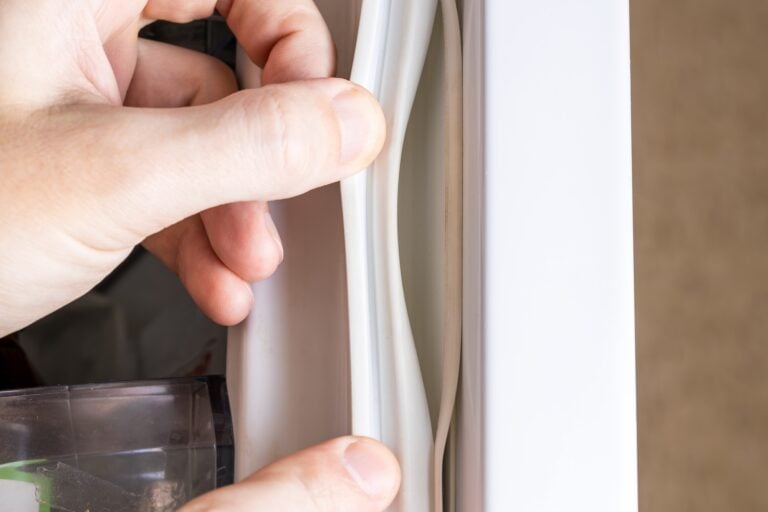
Fridges and freezers are some of the hardest-working appliances we own. They run 24/7, in homes and businesses alike. That means even small problems, like a worn fridge seal, can gradually drive up fridge energy waste and costs over time.
Whether you’re a homeowner trying to cut energy bills or a business managing multiple refrigeration units, this simple checklist will help you spot when your fridge might be wasting energy and money.
Fridge energy consumption: Home appliances vs commercial refrigeration
According to Statista, the food and drink industry is the country’s second-largest energy user. A large chunk of that energy goes straight into keeping food cold. For manufacturers, refrigeration often makes up around half of all electricity used on-site.
For smaller businesses like restaurants, cafés, and catering companies, the picture is similar. Fridges, freezers, and cold rooms typically account for around 40% of total energy use. That makes refrigeration one of the biggest drivers of running costs, even though it’s often treated as a fixed expense rather than something that can be improved or optimised.
At home, fridges can add to your electricity bill too. The average UK household uses about 2,700 kWh of electricity a year. A standard fridge-freezer usually takes up 200–400 kWh of that, while larger American-style models with ice makers and water dispensers can use 500 kWh or more every year.
Energy ratings make a big difference here. A small, high-efficiency fridge might use as little as 90 kWh a year, while a similar-sized but less efficient model could use nearly three times as much.
| Fridge Type | Annual Energy Use (kWh) | Annual Cost (£ at 34p/kWh) |
| D Rated Freestanding | 130 | 44.20 |
| F Rated Freestanding | 209 | 71.17 |
| A Rated Fridge Freezer | 111 | 37.85 |
| F Rated Fridge Freezer | 276 | 94.06 |
| C Rated American Style | 225 | 76.50 |
| F Rated American Style | 405 | 137.92 |
Whether you’re running a commercial kitchen or managing household bills, it’s clear that fridge efficiency isn’t a minor detail. It’s one of the easiest places to cut energy waste, reduce costs, and avoid paying more than you need to for electricity that’s literally leaking away.
The impact of seals on fridge energy waste
The thermodynamic efficiency of any refrigeration unit hinges on its ability to maintain a strictly controlled internal environment against the heat of the ambient exterior.
This function is performed by fridge seals.
When a seal is damaged, loose, or worn down, it stops forming a tight barrier. Cold air slowly leaks out, and warm air from the room creeps in. You might not notice it happening, but your fridge’s efficiency and bills definitely do.
In a healthy fridge, the compressor cycles on and off throughout the day. With a faulty seal, those quiet breaks disappear. The unit may run almost constantly, which is a warning sign that something isn’t right. In commercial kitchens, this problem is much worse. Fridge doors are opened frequently, the rooms are warmer, and for restaurants, there’s more moisture in the air from cooking.
The good news is that something as simple as replacing a worn seal can cut energy waste by 15–25% per unit. That’s a significant saving for both homes and businesses.
If you are a facility manager, check our guide to A Guide to Managing Fridge Seal Replacements Across Sites
Businesses: The facility manager’s audit
Refrigeration is a “Critical Control Point” for food safety and should be part of your HACCP plan.
1. Seal integrity & hygiene
- Weekly inspection: Clean seals with mild detergent. Inspect for tears, gaps at the corners, or microbial growth (mould), which is a compliance violation.
- Seal condition: damaged fridge seals pose critical risks for businesses. Check for seals pulling away from the frame or hardening from heavy use. If the doors feel “lighter” to pull open than usual, the suction is failing.
2. Operational & temperature checks
- Temperature pattern logging: Maintain daily logs. If temperatures rise during quiet periods, it indicates a failing seal or compressor.
- Thermostat calibration: Quarterly, use an independent thermometer to verify the built-in gauge.
- The dark-room test: Check for visible light through seals to detect major air leaks.
3. Equipment maintenance
A regular commercial fridge maintenance schedule is essential to meet food safety standards. You should perform:
- Monthly condenser service: In kitchens, airborne grease and flour clog fins quickly. Vacuum these monthly to prevent the motor from overworking.
- Door management: Ensure rapid-closing doors are not overridden. In cold rooms, check that strip curtains are intact; these can reduce plant load by up to 30%.
4. System “stress” indicators
- Ice & moisture: Look for ice forming around door frames or condensation on glass doors.
- Mechanical strain: If compressors run almost continuously or the unit feels warm around the door frames, the system is struggling to maintain its set point.
Download our free checklist for facility managers and take control of food storage, compliance, and cost savings.
Download FREE checklistHomeowners: The diagnostic checklist to reduce fridge energy waste
Recommended frequency: Every 3–6 months.
1. Physical & visual inspection
- The elasticity check: Gently press the gasket (the rubber seal). It should feel flexible. If it feels hard, brittle, shiny, or doesn’t spring back, the material has “dried out.”
- Surface damage: Look for cracks, splits, flattened sections, or warped edges that prevent the seal from sitting flat against the fridge body.
- Cleanliness: Check for dirt, residue, or grease. These prevent full contact and can degrade the rubber over time.
2. Door closure & performance tests
- The paper/banknote test: Close the door on a piece of paper. If it pulls out with no resistance, the magnetic seal is weak.
- The flashlight test: At night, place a switched-on flashlight inside the fridge. If light peaks through the door edges, you have a leak.
- Automatic closure: The door should close smoothly on its own. If it needs a firm push or springs back open after closing, the alignment or seal is failing.
- Vacuuming the coils: Annually vacuum the condenser coils at the back or bottom to ensure efficient heat rejection.
3. Warning signs (energy drains)
- Moisture: Look for condensation (fogging on glass, water streaks, or damp items near the front), which indicates warm air is seeping in.
- Cycle time: If the fridge runs more frequently than expected or the temperature feels inconsistent near the door, cold air is likely escaping.
Download your free PDF guide to reducing fridge energy waste.
Download FREE checklistConclusion
Fridge energy waste in homes is more about saving costs. In businesses, fridges and freezers are critical to daily operations, which makes energy waste a bigger financial and operational risk.
In both cases, one factor stands out above all others: the condition of the door seal. A failing seal quietly drives up energy use, increases wear on the appliance, and shortens its lifespan.
For households, staying efficient doesn’t need to be complicated. A simple yearly check of fridge seals, keeping doors closed properly, and positioning appliances away from heat sources can make a noticeable difference to energy bills.
For food businesses and stores, a more proactive approach is essential. Regular maintenance checks, investing in durable, high-quality seals, and choosing doored refrigeration units instead of open displays can significantly reduce energy waste. These steps don’t just cut costs, they also support long-term sustainability goals and help protect against rising energy prices.
As the UK moves closer to Net Zero and energy costs remain high, the hidden waste caused by worn fridge seals is something neither households nor businesses can afford to ignore.
Need help finding the correct seal replacement for your refrigeration unit? Get in touch today to discover how our tailored supply solutions can make fridge seal management simpler and more efficient.
Fridge energy waste FAQ
How much does it cost to run a refrigerator 24 hours a day?
The cost depends heavily on the model’s efficiency and size. Based on standard UK tariffs (~30p-34p per kWh):
- High-efficiency (A-Rated): Roughly 10p per day (£37.85 per year).
- Standard (F-Rated): Roughly 25p per day (£94.06 per year).
- Large (American style F-Rated): Roughly 37p per day (£137.92 per year).
- Commercial units: In professional settings like restaurants, costs are much higher, averaging over £7,000 per year per business.
Should I put my fridge on 1 or 7 for energy saving?
You should generally aim for a middle setting (around 3 or 4).
- The rule: On most manual dials, 1 is the warmest and 7 is the coldest.
- Energy saving: Setting your fridge to “7” (the coldest) is a common cause of electricity waste. It forces the compressor to run much longer and can even freeze your food.
- The goal: Aim for an internal temperature between 3°C and 5°C. Most households find that a setting of 3 (on a 1-5 scale) or 4 (on a 1-9 scale) achieves this balance of safety and savings. We also recommend reading this guide on freezer temperature to ensure food safety and energy efficiency.
Does a refrigerator waste a lot of electricity?
Yes, potentially. While modern refrigerators are designed to be efficient, they can become major energy wasters due to:
- Constant operation: Because they run 24/7, even small inefficiencies (like a faulty seal) are “cumulatively expensive.”
- Poor maintenance: A damaged door seal can cause a unit to waste 15% to 25% of its energy. In extreme cases, it can cause the unit to use three times more power than intended.
- User error: Leaving “fast-freeze” settings on or setting the dial to the coldest possible number are leading causes of “over-consumption.”