Quality in a refrigeration gasket is not always intuitive. A seal that feels soft might be performing poorly, while one that appears hard might be the right specification. And cost per metre tells you nothing about whether it will perform reliably under the specific conditions it faces.
This guide will address quality from an engineering perspective. It covers the measurable properties that determine gasket performance, how to evaluate those properties across material options, and the specification decisions that prevent premature failure and unexpected downtime in commercial refrigeration.
What Makes a Gasket ‘Good’? – Defining Quality
A quality gasket meets three criteria:
- Sealing performance: It seals effectively across the full service life, maintaining consistent contact with the door frame under opening and closing cycles.
- Material durability: It resists degradation from the environment it operates. This includes temperature cycling, moisture, cleaning chemicals, mechanical stress, and any other process-specific exposures.
- Commercial practicality: It performs reliably within the constraints of cost and supply chain, with acceptable lead times and consistent batch properties.
These three factors define gasket quality. A seal might have excellent material properties but fail in practice if it cannot be fitted reliably to the door frame. Conversely, one with the right material might fail if incorrectly specified for the temperature range or chemical environment.
Compression and the Seal Contact
The fundamental job of a gasket is to maintain contact with the door frame under compression. That contact must be:
- Continuous: no gaps or intermittent zones, to prevent cold air loss and warm air infiltration.
- Consistent: the same across all four sides of the door, so no section underperforms.
- Sustainable: maintained across thousands of opening and closing cycles, without permanent deformation.
Compression is where most gasket failures originate. A gasket with poor compression set resistance deforms under repeated pressure cycles, losing the ability to spring back. Over months, the contact becomes intermittent. This is why Shore A hardness alone is not a meaningful quality metric.
Compression Set vs. Hardness
Shore A hardness (typically 55–65 for commercial refrigeration gaskets) measures resistance to indentation. A harder gasket resists scratching and tearing, while a softer one compresses more easily. But hardness does not predict compression set (the permanent deformation that occurs after sustained compression).
A gasket might feel appropriately firm but lose 15–20% of its thickness after a year of high-cycle use in a commercial environment. This is compression set failure. Quality gaskets are formulated to minimise compression set. They will typically achieve less than 25% set under standardised 70-hour 23°C compression testing.
For engineers specifying gaskets, compression set resistance is a better predictor of longevity than hardness. If the supplier provides compression set data, that data is more valuable than Shore A alone.
Material Properties and Environmental Resistance
The material choice is the foundation of durability. Different elastomers have different environmental profiles, and specifying the wrong material is a common source of premature failure.
Choosing the Right Elastomer for Your Application
The most common gasket materials for refrigeration are:
EPDM: The standard for commercial cold rooms. Low-temperature flexibility (to around –40°C), strong resistance to moisture and water-based cleaning agents, and good compression set resistance. EPDM’s saturated backbone resists oxidation, ozone, and UV, which is important for outdoor or semi-outdoor installations.
PVC: The most widely used material in domestic and commercial fridge/freezer seals. Cost-effective and reliable for standard temperature cycling. Less flexible than EPDM at very low temperatures but sufficient for most chilled and frozen storage applications. They are also used for strip door curtains, which can help conserve energy.
Silicone: Preferred for pharmaceutical refrigeration and specialist high-temperature applications. Maintains flexibility across wider temperature ranges and meets strict food contact regulations where required.
Rubber: Natural or synthetic blends offer good flexibility and durability in standard applications. Often used where cost and performance balance is important.
TPE: Thermoplastic elastomer offers similar properties to rubber, but is known for easier processing and recyclability.
Viton: Specified where chemical or oil exposure is a concern, or in process-critical applications requiring chemical resistance EPDM cannot provide.
Rather than focusing on cost alone, the application environment (temperature range, chemical exposure, regulatory requirements) should drive the material choice for engineers specifying gaskets.
Profile Geometry and Fit
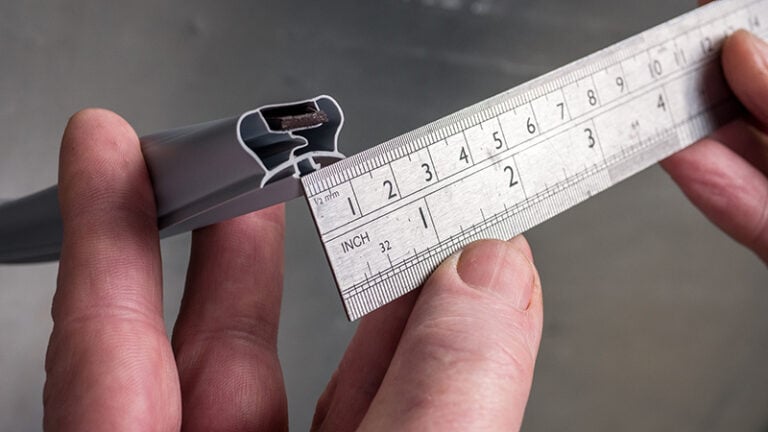
A high-quality material in the wrong profile is a poor gasket. The profile must match the door frame geometry, and the cross-section must provide the right compression characteristics for that frame.
Different profile types serve different sealing requirements:
- Dart profiles: Arrow-head design for commercial refrigeration. Push-in installation without tools; high durability under frequent door cycles.
- Compression profiles: Designed for chest freezers and latched units, relying on weight and pressure to create an airtight seal. Effective for applications where closure force is predictable.
- Lip profiles: Combine flexibility with a reinforced retainer for firm, secure fixing in the door frame without stretching or twisting.
- Flap profiles: Versatile, all-purpose design suitable across multiple refrigeration applications.
- Rubber profiles: Rugged construction for cold rooms and high-traffic environments. Designed for heavy-duty longevity and wear resistance.
- Magnetic gaskets. They include a magnetic insert to increase closure force, useful for doors that do not close firmly.
Fitting an off-the-shelf profile to a non-standard door frame introduces gaps or excessive compression. Either results in poor sealing. For non-standard door frame geometries, bespoke gaskets matched to the exact cross-section are essential.
Fixing Method and Long-Term Reliability
How the gasket is secured affects both installation reliability and ease of replacement.
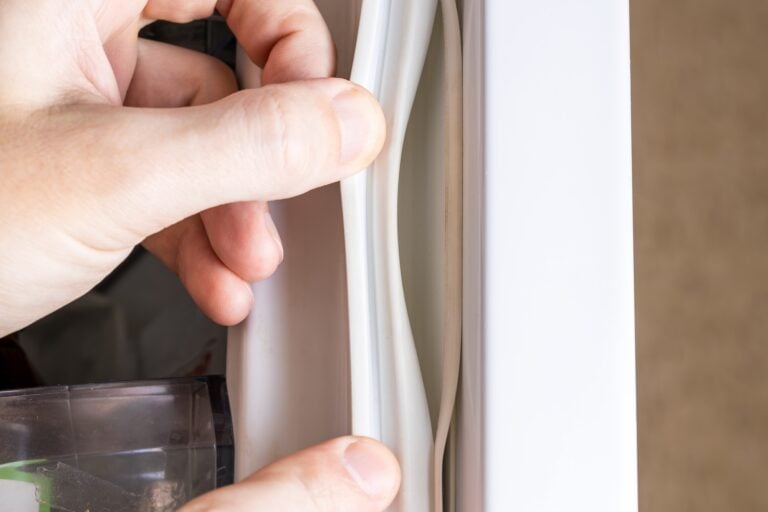
Mechanical fixing (retainer channel or clip system) is the standard in commercial refrigeration. The gasket sits in a channel in the door frame, held by friction and (often) a retention strip. This approach is highly reliable and allows the seal to be replaced without removing the door or frame.
Adhesive bonding is less common in commercial applications due to surface preparation challenges and long cure times. It is used where a channel system is not practical, but generally introduces more variables into installation quality.
For commercial refrigeration, mechanical fixing is usually preferable. It is faster to install, easier to replace, and does not depend on surface preparation or adhesive cure time.
Temperature Range and Specification
Material selection and temperature specification are interdependent. Each elastomer has an effective operating window. Specifying the wrong material for the temperature range is a common source of premature failure.
| Material | Temperature Range | Best For |
| PVC | -15°C to +60°C | Domestic and commercial fridges; standard temperature cycling |
| EPDM | -40°C to +120°C | Commercial cold rooms, walk-in freezers; wide temperature swing tolerance |
| TPE | -20°C to +80°C | General-purpose sealing where cost-performance balance matters |
| Rubber | -30°C to +100°C | Cold rooms and high-traffic environments; good flexibility across range |
| Silicone | -50°C to +200°C | Extreme temperatures; pharmaceutical and blast freezers |
| Viton | -20°C to +200°C | Chemical resistance required; process-critical applications |
Within each material, formulations can be tailored for specific demands. Standard EPDM suits most commercial cold rooms (-40°C to +100°C), but freezer-grade variants remain pliable below -40°C for ultra-cold storage. Similarly, food-grade options meet regulatory compliance regardless of temperature rating.
The practical consequence is viscosity and compound stiffness at the application temperature. Specifying standard EPDM for a -25°C freezer where freezer-grade is needed results in a seal that becomes stiff, loses compression, and fails prematurely. Conversely, PVC is unsuitable for cold rooms operating below -15°C, where EPDM or silicone becomes necessary.
For engineers evaluating gaskets, confirm the material’s temperature rating matches your lowest and highest operating points, accounting for seasonal variation and process cycles.
Common Failure Modes and How to Avoid Them
Compression Loss
Failure: The seal hardens or flattens after months of use and no longer contacts the frame evenly.
Reason: This is usually compression set failure (poor material choice) or thermal degradation (wrong compound for temperature).
Specification: Confirm compression set data and use the correct compound for the operating temperature range.
Cracking and Tearing
Failure: The gasket develops cracks at corners or along stress lines, particularly if the profile is stretched, kinked, or twisted during installation.
Reason: This is installation-related failure.
Specification: Use the correct profile for the door frame, and ensure the gasket is not stretched or distorted during fitting.
Poor Suction and Seal Force
Failure: The door does not seal tightly or requires excessive force to close.
Reason: This often indicates a mismatch between the gasket profile and the door frame, or a gasket that has lost compression. In some cases, the door itself may not align properly with the frame.
Specification: Verify that the gasket profile is correct for the door frame geometry and that the door frame is square and properly aligned. Magnetic inserts can increase closure force where needed.
Environmental Degradation
Failure: The seal degrades prematurely due to exposure to substances it is not resistant to. For example, EPDM in contact with oils or petroleum-based solvents.
Reason: This is a material misspecification.
Specification: Confirm the processes and cleaning chemicals that the gasket will contact, and verify material compatibility before specifying.
How to Evaluate Gasket Quality When Specifying
When evaluating a gasket supplier or specification, request the following information:
- Material specification. Confirm the elastomer type and formulation (EPDM, PVC, silicone, rubber, TPE, Viton), temperature rating, and any regulatory compliance requirements (food-grade, pharmaceutical standards, etc) if applicable.
- Compression set test data. Request compression set test data showing how much the gasket deforms under sustained loading. A typical requirement is minimal set (<25%) after extended compression cycles. For freezer applications, verify performance at the lowest operating temperature, as compression resistance can vary significantly in cold conditions.
- Profile cross-section drawing or sample. Ensure the profile matches your door frame geometry. It may be possible to request a test sample to verify fit before ordering volume.
- Lead time and availability. For replacement programmes, confirm supply consistency. Interrupted supply is expensive.
Custom vs. Off-the-Shelf Gaskets
Off-the-shelf profiles work well when the door frame matches a standard geometry. The advantage is low cost, short lead times, and proven performance.
Custom bespoke gaskets are necessary when:
- The door frame does not match standard profiles.
- The operating environment is non-standard (unusual temperature, specific chemicals, regulatory constraints).
- The volume justifies tooling cost (typically 500+ metres annually).
- A specific compression or sealing pressure is required.
Bespoke gaskets are specified by profile drawing and material specification. The cost per metre can sometimes be higher than off-the-shelf, but for non-standard applications, it is the only reliable option.
Branded vs. Bespoke Profile Selection
Branded seals cover most common refrigeration applications. Off-the-shelf options offer low cost, short lead times, and proven performance.
For applications that don’t match standard branded ranges, there is a broad selection from different profiles across dart, flap, compression, lip, rubber, and silicone types. Selecting from these suits non-standard door frame geometries, unusual operating environments (extreme temperature, chemical exposure, regulatory requirements), or where a specific compression characteristic is needed.
What Does a Quality Gasket Cost?
The cost of a quality seal depends on the profile, material, and the exact dimensions required for your unit. A properly specified seal with welded corners matched to your door frame geometry is more economical than a cheaper alternative that fails prematurely. Complete, factory-welded seals perform better than profiles sold by the metre, as they ensure an effective thermal barrier and consistent performance around the full perimeter of the door.
For cost-conscious specification, the question is total cost of ownership: initial gasket cost + labour to replace it + downtime cost if the seal fails prematurely.
A properly specified mid-range gasket, matched to the application environment, typically outperforms both cheaper and more expensive alternatives over its full service life.
The cost of quality gaskets for commercial refrigeration depends on material choice, profile complexity, and whether custom tooling is required. Standard EPDM and PVC tend to be the most cost-effective, while food-grade and freezer-grade formulations often have a higher price point. Silicone and Viton are usually more expensive, due to their specialized environmental resistance.
Lifespan and Maintenance
Under normal operating conditions, gasket service life varies by material and application. EPDM gaskets in commercial cold rooms typically last 2–3 years under high-traffic use, while less-frequently-used installations can extend to 5+ years. PVC seals in domestic fridges average 3 to 5 years (6 months to 3 years in commercial settings), and silicone gaskets in specialist or extreme-temperature applications can often exceed 5 years with minimal degradation.
Factors that shorten lifespan:
- High opening/closing frequency. Every door cycle compresses and stresses the seal.
- Harsh cleaning regimens. Frequent or high-temperature washing accelerates rubber degradation.
- Poor environmental sealing. Moisture ingress, condensation, and biological growth accelerate failure.
- Physical damage. Cuts, tears, or impact damage reduce service life below theoretical maximum.
Planned inspection and replacement is more reliable than waiting for visible failure. Learn the signs that a gasket needs replacing before it causes temperature instability or hygiene issues.
How to Choose a Door Seal: A Specification Checklist
Selecting the right gasket involves six key decisions:
- Material.
- PVC for domestic and standard commercial fridges
- EPDM for commercial cold rooms and high-traffic environments
- Silicone for pharmaceutical or specialist applications
- Viton for chemical or oil exposure.
- Temperature grade.
- Standard EPDM for -40°C to +100°C
- Freezer-grade for ultra-low
- Food-grade if regulatory compliance is required.
- Profile geometry.
- Match the cross-section exactly to the door frame.
- Request a test sample to verify fit.
- Fixing method.
- Mechanical retainer channels for commercial refrigeration
- Screw-on plates where retainer channels are not practical
- Compression properties
- Request compression set data (<25% typical). Shore A hardness alone is not predictive of performance.
- Supply reliability. Confirm:
- lead times
- batch testing
- availability for replacement orders.
For technical guidance on gasket specification, explore our Trade Services offering for engineers and service companies or contact our team directly.
Frequently Asked Questions About Refrigerator Gaskets
How do I know what type of gasket to use?
Start with the door frame cross-section. If you have the original equipment manufacturer’s part number, use that. If not, measure the cross-section and match it against supplier catalogues or request a custom profile. Specify EPDM unless the environment (temperature, chemicals, regulatory requirements) dictates otherwise.
How can I improve sealing performance?
Ensure the gasket profile is correct for your door frame (no stretching, twisting, or kinks). Replace the gasket if it is showing signs of compression loss or damage. For doors that are difficult to close, confirm door frame alignment and consider magnetic inserts. Read our blog on improving seal performance.
Can I get a bespoke gasket for my non-standard door frame?
Yes. If you provide a cross-section drawing and material specification, The Seal Company can create bespoke gaskets. This is the reliable option for unique geometries or custom installations.