Commercial refrigeration equipment across kitchens, restaurants, and food storage facilities all depend on a properly functioning door seal. True units (including their undercounter models, reach-in cabinets, prep stations, and walk-in chambers) need a healthy seal to lock in temperature and minimise energy waste. If there are issues with the seal, energy efficiency drops while compressor strain increases. Knowing how to diagnose, measure, and replace a worn seal reduces costly downtime and prevents compliance risks.
This guide covers the essentials of True refrigeration seals: their profiles and applications, how to recognise early warning signs of wear, and why specialist seal suppliers often beat OEM lead times and pricing.
Brand Overview
Founded in 1945 in St. Louis, Missouri, True Manufacturing began as a family enterprise when Bob Trulaske, alongside his father Frank and later his brother Art, developed True’s first commercial refrigeration unit in their garage. Now headquartered in O’Fallon, Missouri, True is recognised as a leading manufacturer of commercial refrigerators and freezers for the food service and soft drink industries. The company continues as an American manufacturer, but serves commercial customers in over 100 countries.
While True equipment is built for durability, door seals often wear faster than other components due to frequent use, especially in commercial settings. Understanding the mechanisms behind True’s seals, how to maintain them, and when to replace them can help you get the most out of your True equipment.
A Summary of True Seal Profiles
True uses two primary seal profiles. Understanding which one is best suited to your unit will make ordering a replacement straightforward.
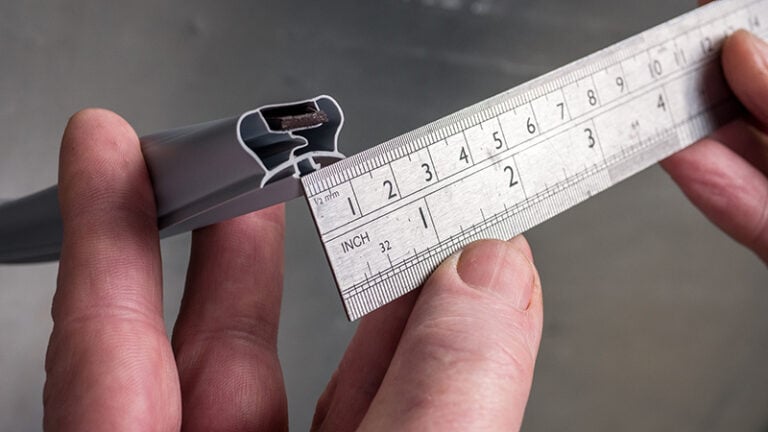
- Dart profiles are used across True’s reach-in and undercounter range. Some feature a magnetic strip for snap-fit closure without requiring a manual latch. Others (such as the TSC-2049-D) use non-magnetic dart seals, but the convenient snap-fit closure mechanism remains the same. Installation tends to be straightforward: pull the old seal from the groove and push the new one in. True seals are usually made with either Santoprene or flexible PVC
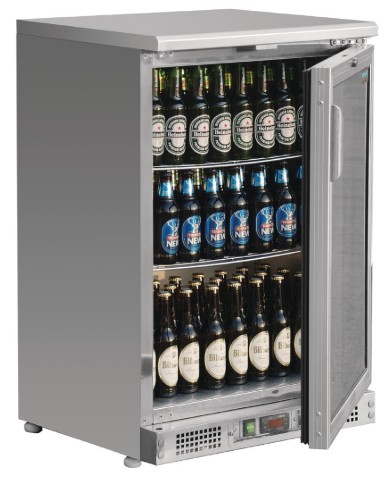
- Display Merchandiser Seals are used on True’s glass-front display cases. These seals are engineered for injected-molded doors on beverage coolers and product displays. Like the standard dart profiles, they use snap-in installation.
Where to Find a True Seal
When a True seal fails, two options exist: you can order through True’s official network, or source an OEM-quality replacement seal from a specialist supplier.
True’s authorised channels connect you to service partners and OEM dealers. Dealing directly with the brand can have some advantages, but often involves longer waiting periods and premium pricing (reflecting distributor markups and logistics overhead).
Specialist seal suppliers can provide True profiles, are often used to working with True equipment specifically, and can move faster. At The Seal Company, we can supply over 1,500 True seals in our dedicated True seal range, at competitive prices.
Finding the right seal for your model is easy, and all True seal profiles are kept on file. Orders placed before 12 pm are manufactured and dispatched the same day for next-day delivery. No dealer markup, and no wait-list. Our client feedback such as the review from Ismail Refet below testifies that compared to other suppliers, we provide high quality service and one of the easiest ordering methods.

True Products We Supply Seals For
The Seal Company manufactures and supplies OEM-quality door seals for the full True refrigeration range. We cover:
- Reach-in refrigerators & freezers: TA series (TA1, TA2), TG series (TG1, TG2), TR series (TR1, TR2), T-Series models (T-19, T-23, T-49)
- Undercounter units
- Display merchandisers: GDM series (GDM-19T, GDM-23W) and similar glass-door models)
- Prep tables & makelines: We provide True prep table and makeline seals (part numbers 934757, 932587, 934755, 934756). This includes the Makeline Bin Lid Seals, which can otherwise be difficult to find.
- Other True models: If your model isn’t listed above, contact us with your model/serial number, and we can manufacture a bespoke seal.
Popular models can be dispatched quickly. For older, rare, or discontinued True units, we can custom-manufacture seals to your precise cavity measurements, often also with next-day delivery.
Our most commonly ordered True seals include the Makeline Bin Lid Seals (934757, 932587, 934755, 934756), the non-magnetic TSC-2049-D for Makeline lids, and the general-use part numbers 810719 and 810862.
How True Seals Wear in Commercial Kitchens
True equipment handles high-use commercial settings, but certain conditions force faster seal degradation. Busy kitchens see 50+ door openings per day, and each cycle creates micro-stress on the seal.
Seals degrade not just from mechanical friction, but also from chemical and biological exposure. Grease residue, food particles, and moisture pool inside gasket folds. If not properly protected from mould, these can grow mouldy and gradually break down the material structure. Surface cleaning masks the problem, but doesn’t reverse it.
Expected lifespan for True seals in commercial use:
- PVC seals: 6 months to 3 years, depending on usage intensity
- Santoprene seals: around 3 years, depending on frequency of use
Monthly inspections and proactive replacement cycles cut downtime risk and preserve compressor efficiency. This approach also supports EHO (Environmental Health Officer) compliance audits and food safety certifications.
Troubleshooting: Common True Seal Issues
Your True seal may be degrading if you notice any of these symptoms indicating that you should replace the seal. The table outlines how to address some common issues:
| Problem | What It Indicates |
| Temperature fluctuations or unit running constantly | Worn seal losing elasticity. Small gaps form around the perimeter, letting warm air enter. This makes the compressor overcompensate. |
| Visible frost or condensation around the door frame | Seal breakdown. Warm air enters the cold interior, condenses, and freezes on the seal or frame. If you cannot stop frost forming despite regular cleaning, you probably need to replace your seal. |
| Visible gaps, cracks, or tears in the gasket | Physical seal damage such as splits, hardened or brittle rubber, visible wear at corners, or sections not sitting flush against the frame indicate that replacement is urgently needed. |
| Door pops open slightly or feels loose, like it’s not sealing correctly | Compressed or worn seal that’s lost its grip. Test with the paper method: close the door on a sheet of paper and try to pull it out. If it slides out with little resistance, the seal needs replacing. |
| Mould or black spots on the gasket | Moisture retention and food safety risk. Food debris and moisture gather in the seal folds. Surface cleaning may help, but repeated mould indicates a broader issue and the seal likely needs replacement. |
How to Identify and Measure Your True Seal
Have a close look at the unit’s visual characteristics. True refrigeration features stainless steel construction on both interior and exterior surfaces. True’s reach-in and undercounter models have stainless steel doors with locks and cam-lift hinges, paired with digital temperature controls and LED or incandescent interior lighting. Many models come equipped with 5″ castors for mobility. These details, along with the ‘Made in USA’ marking and model series badges (TA, TG, TR, T-Series, GDM), can help you confirm you’re dealing with genuine True equipment.
Unlike most other brands, True’s model number alone is not enough to identify the correct seal. This is because True uses the same model number across multiple sizes and profiles. You must use the Serial Number to find the correct gasket part number.
To identify the correct replacement gasket:
- Locate the serial number on your unit’s dataplate (usually on the side or back)
- Visit True’s serial number search tool at and enter your serial number
- This will return your unit’s Gasket Number (the True part number you need)
- Check the seal profile and dimensions shown on True’s website. We supply cross-section photos of all profiles, so you can visually confirm which seal you need
- We can then supply the correct seal for fast and affordable replacement
If you cannot find a suitable seal, or your True unit is discontinued or an older model, we can manufacture a custom bespoke seal. Bespoke gaskets are especially convenient when a replacement directly from the official brand is no longer available. Usually, the required seal profile or dimensions will already exist in our database.
If a completely bespoke seal is required, we will need accurate measurements of the internal door cavity. To order a custom bespoke seal, measure the cavity width and height in millimetres at multiple points to account for any variation. You should also check the corner details, including whether they are square or rounded, and note any non-standard features that could affect the fit.
Take care when measuring:
- Don’t measure the door itself. It will be slightly bigger than the cavity to let it close properly.
- Measure at several points around the cavity, as dimensions can differ slightly between the top, middle and bottom.
- Don’t assume every corner has the same radius. Measure each one before placing your order.
Once you know your measurements, we can use them alongside any available model information to find the correct profile, check whether a suitable seal already exists or provide a quote for a custom replacement.
If you’re still not sure what type of seal you need, you can use our straightforward Seal ID service, and we can help you quickly identify the correct replacement.
How to Replace a True Seal
Some minor problems with your fridge or freezer seal can be repaired by yourself. However, these temporary fixes often cannot adequately address the root problem. For food safety and energy efficiency reasons, commercial operators often benefit more from proper replacement. Most True seal swaps are quick, and typically take less than an hour.
For dart-profile seals, you can usually pull out the old one and push the fresh seal into the slot. You can also watch our video replacement guide for in-depth instructions or read our step-by-step guide below.
Step by step:
- Step 1: Prepare
- Flatten the new seal for a few hours to straighten out kinks. A hairdryer can assist with this if needed, and can help the seal fit more easily.
- Switch off power. Allow 1 to 2 hours for the unit to get warmer, as cold seals tear more easily.
- Step 2: Remove Old Seal
- Start at a corner and slowly pull the seal from the groove. Watch out to avoid damaging the channel.
- Step 3: Clean the Groove
- Wipe the groove down with mild detergent and then dry it thoroughly. Get rid of any mould, debris, or residue.
- File smooth any burrs or sharp edges.
- Step 4: Fit the New Seal
- Anchor the corners first, then work along the top, bottom, and sides. Use steady, even pressure. Be careful not to overstretch.
- Use a blunt tool or knuckle to press stubborn areas.
- Step 5: Test
- Close the door and check for gaps or wrinkles. For more advice on how to achieve a perfect seal, watch our video instructions. If gaps persist, the gentle heat of a hairdryer can help:
- When you have finished, use the paper test to verify your work: close the door on a sheet of paper and pull. If the door grips firmly, you’re all good. If the paper easily slides free, you may need to reseat the seal.
- Aftercare
- Clean regularly with mild detergent to prevent mould.
- Ensure regular maintenance
- Check regularly to ensure the seal is still snug.
When to Call a Refrigeration Engineer
DIY seal replacement is within reach for most operators, but some situations do require professional help. Knowing when a specialist should be called saves time, prevents more damage, and protects your food safety compliance.
Situations in which calling an engineer may be the best option include:
- The door no longer seats flush after new seal installation. A gap that persists can suggest structural issues. Even a perfectly fitted seal will perform poorly against a misaligned door. Over time, this mismatch will shred each new seal prematurely.
- Cooling performance remains erratic despite a correctly installed new seal. If the unit still struggles to hold the correct fridge temperature, the fault likely lies in the refrigeration circuit itself. Compressor degradation, faulty thermostat, restricted airflow inside the cabinet, or refrigerant charge problems are all mechanical failures that will not be addressed by replacement seals.
- Your unit is under True warranty. DIY work can invalidate coverage terms, so it can be worth contacting your service provider or True directly before replacing the seal yourself.
Why A Working Fridge Seal is Important
Faulty seals and delays in gasket replacement can expose operations to significant risk: inventory spoilage, service cancellations, regulatory flags during inspections, and revenue loss while waiting for parts. When handled well, however, the seal replacement process can be very fast.
True units are engineered for durability across years of service. The seal, however, will wear with frequent use. Staying alert to warning signs and securing replacements without delay preserves both compliance standing and cash flow.
The Seal Company provides bespoke, made to order seals for popular True models, often with next-day delivery. Custom-measured seals are also available to efficiently assist when a model is discontinued or non-standard.
Do you need to replace your True seal? Start by finding your model number on your unit’s nameplate. Then browse our range of True seals, filter by your model, and order online. If your model isn’t listed, our team can still provide a bespoke quote.
Not sure which seal you need? Use our identification guide or contact our experts.