Polar is one of the most widely used commercial refrigeration brands in the UK. Its upright fridges, undercounter freezers, prep counters and display chillers work hard in kitchens, cafés, bars and shops. Every one of those units needs a door seal in good condition to keep cold air in. When a seal starts to wear, warm air gets into the cabinet and the compressor has to run for longer, which pushes up energy bills. Catching a worn seal early, and knowing how to find and fit the right replacement, helps you avoid breakdowns and keep your food safety checks on track.
In this guide we explain the seal profiles used on Polar equipment, how to spot a failing seal and how to identify, measure & fit a new one.
Brand Overview
Polar Refrigeration was founded in 1998 and is based in Bristol. The brand is owned by the catering equipment supplier Nisbets. Polar’s equipment is sold in more than 100 countries, and over 500,000 Polar units have been sold worldwide. The range includes kitchen refrigeration, shop and bar display units, blast chillers and ice machines.
Polar organises its range into three product series, C, G and U, to make it easier to choose the right unit for your needs and budget:
- C-Series: designed for everyday commercial use in less demanding environments, where the unit won’t be opened often.
- G-Series: built for demanding professional kitchens, with strong construction and hard-working compressors for units that are opened frequently.
- U-Series: the top of the Polar range, built to hold a steady temperature even with very frequent use and in ambient conditions up to 43°C.
Polar units are designed for busy commercial use, but the door seal is a wear part, which means it will need replacing many times over the life of the cabinet. If you know which seal fits your unit and how to care for it, you can keep your Polar equipment running efficiently for longer.
A Summary of Polar Seal Profiles
Before you order, it helps to know a few things about how Polar seals are fitted and referenced:
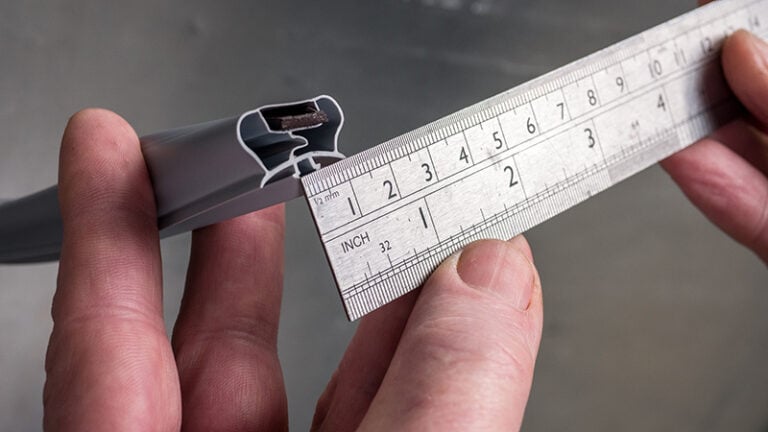
Polar seals use dart (push-in) profiles, which push into a retaining slot around the door. Our made-to-measure Polar options include the TSC-2011-D, TSC-2080-D and TSC-2081-D profiles. On profiles such as the TSC-2011-D, the dart sits in line with a magnet box.
Each Polar seal can be found by two different numbers. The first is the model number of your fridge or freezer, which is printed on the unit’s rating plate. The second is the part number Polar gives the door seal itself, such as AB338 or AD023. On our Polar product listings, you’ll see both numbers side by side. Polar often uses the same seal across several models: the AGNR2, AGNR3 and AUR400, for example, all take seal AB338. If you know either number, you can use it to find the right seal for your unit.
Where to Find a Polar Seal
When a Polar seal fails, you have two options. You can buy a replacement through the manufacturer’s spares channel, or you can order an OEM-quality seal from a specialist supplier.
At The Seal Company, our dedicated Polar seal range includes over 100 Polar seals, and we’ve been making aftermarket Polar seals for over 10 years. Our database of fridge and freezer seal profiles is the largest in the UK, covering more than 600 brands. Every seal is made in the UK to OEM standard, using seal materials sourced from the UK and Western Europe. Our seals can be up to 70% cheaper than buying direct from the manufacturer. All our Polar seals come in grey, and many are also available in black, so you can match the seal you’re replacing.
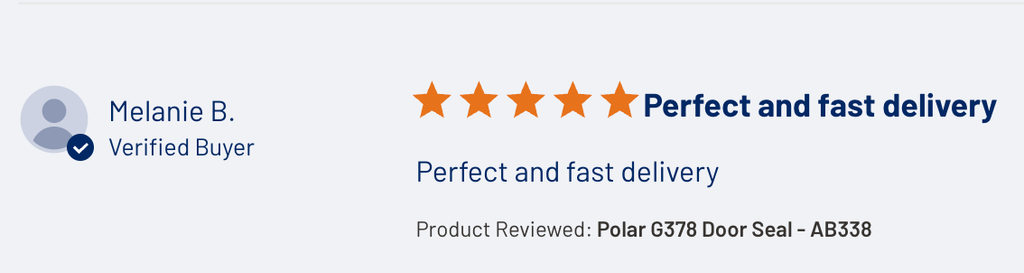
Orders placed before 12pm are dispatched the same day, and UK mainland orders typically arrive within 1 to 2 working days. Customers like Melanie and James have found our team helpful and knowledgeable in getting them the right seal, with great value and quick delivery.

Polar Products We Supply Seals For
Polar’s range covers kitchen, shop and bar refrigeration.
In the kitchen, that includes upright, counter and undercounter fridges and freezers, prep counters, chest freezers, blast chillers and walk-in cold rooms.
Front of house, it covers display fridges, display freezers, multidecks, beer fridges and wine chillers.
We make seals for all Polar models. A few examples:
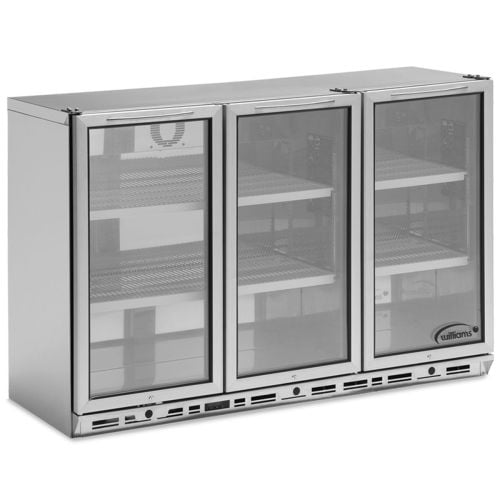
- G378 U-Series three-door counter fridge: seal AB338
- U636 G-Series double-door counter fridge: seal AB321
- CB921 C-Series glass door display freezer: seal AD024
The first letter of a Polar model number doesn’t tell you which series it belongs to. The U636, for example, is a G-Series unit. Always order by the full model number rather than the series.
If you cannot see your model, send us your model number and seal measurements and we will make a bespoke seal to fit.
How Polar Seals Wear in Commercial Environments
A door seal is squeezed and released every time the door shuts and opens. In a busy kitchen, that can happen hundreds of times a day. Over time, the seal gradually loses the springiness it needs to close the gap.
Movement isn’t the only cause. Food residue, grease and condensation can work their way into the folds of the gasket. If they’re left there, mould can grow and the seal material slowly breaks down. Regular cleaning slows this process, but it can’t reverse damage once the material has started to deteriorate.
How quickly a Polar seal wears depends on how heavily the unit is used and how it’s looked after. Checking your seals as part of routine maintenance and replacing them before they fail completely helps protect the compressor. It also keeps you ready for EHO (Environmental Health Officer) inspections.
Troubleshooting: Common Polar Seal Issues
If you notice any of the following, your Polar seal may be failing:
| Problem | What It Indicates |
| The unit runs constantly or can’t reach its set temperature | The seal no longer presses tightly against the cabinet. Warm air is leaking in through small gaps, so the compressor has to work harder to keep up. |
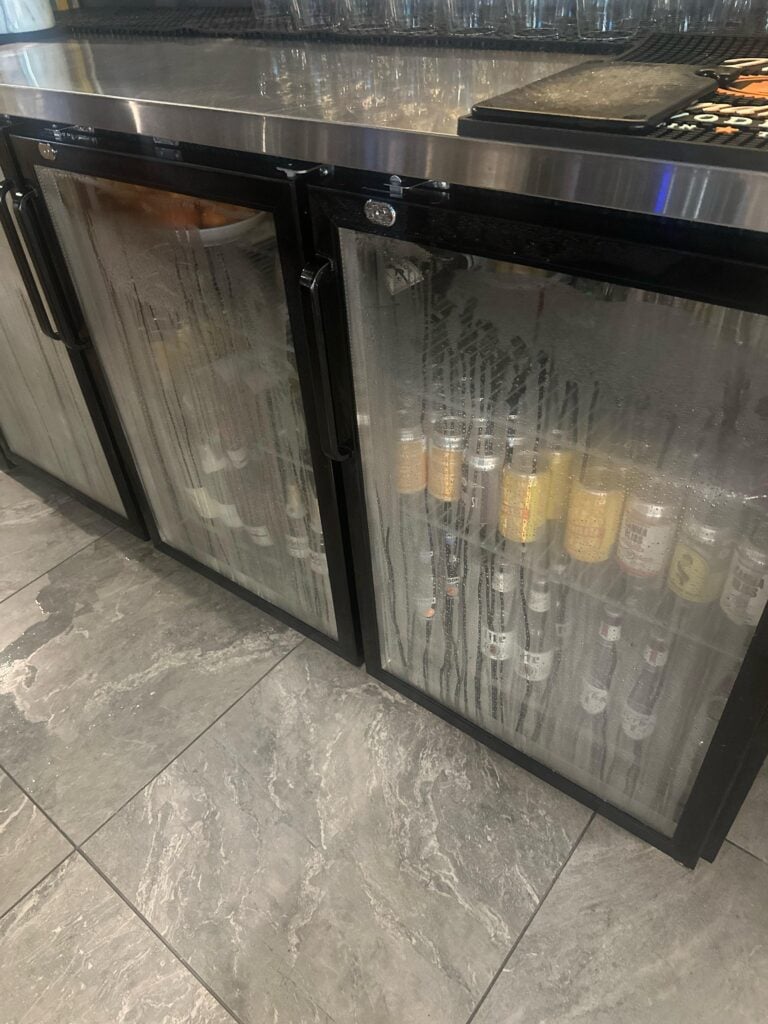
| Ice or condensation forms around the door frame | Moist air from the kitchen is getting past the seal and condensing or freezing on the frame. If ice keeps coming back after you’ve cleaned it off, the seal probably needs replacing. |
| The gasket is split, cracked or torn | Look for brittle or hardened areas, damaged corners, or sections that have pulled away from the cabinet. A damaged seal should be replaced promptly. |
| The door won’t stay shut or swings open | The seal has flattened and no longer grips. To check, close the door on a sheet of paper and pull it. If the paper slides out with little resistance, the seal needs replacing. |
| Mould or dark staining on the seal | Moisture and food debris are building up in the folds, which is a food safety risk. Cleaning can help for a while, but if the mould keeps returning, fit a new seal. |
Identifying and Measuring Your Polar Seal
First, find your model number on the unit’s rating plate. You can then search our Polar range or filter by model to find the matching seal and its OEM gasket reference. If you already know the gasket reference, you can use that too.
Measure the existing seal in millimetres. There are two ways to do this:
- Outside to outside: measure from the outer edge of the seal on one side to the outer edge on the opposite side. This method works for almost all fridge door seals and is most accurate with the seal still fitted to the door.
- Dart to dart: because Polar seals use dart profiles, you can also measure from the inside edge of the slot on one side to the outside edge of the slot on the other side. This method is often more reliable if the old seal is badly damaged or out of shape.
Take both the length and the width. If the old seal has stretched or shrunk with wear, allow for that in your measurements. Our video guide to measuring a seal shows both methods.
If your Polar unit is an older or discontinued model, or it isn’t in our range, we can make a bespoke seal to your measurements. If you’re not sure which seal you need, our seal photo ID service can help.
Replacing Your Polar Seal
Quick fixes may get you through a minor seal problem for a short time, but they rarely last. In a commercial kitchen, fitting a new seal is usually the better choice for both food safety and running costs.
Polar seals are dart-fixing, so fitting a new one means pulling the old seal out of its slot and pushing the new one in. You can watch our video guide to replacing a dart-fixing seal and follow the steps below.
Step 1: Get ready
- Unpack the new seal and lay it flat for a few hours so any creases from packaging can relax.
- Switch the unit off and leave it for 1 to 2 hours to come up to room temperature. A cold seal is stiffer and more likely to tear.
Step 2: Take out the old seal
- Begin at a corner and pull the seal gently out of its slot, taking care not to damage the channel.
Step 3: Clean the slot
- Clean the slot with a mild detergent to remove any mould, food debris or residue, then dry it fully.
- Smooth any rough edges or burrs so they don’t damage the new seal.
Step 4: Fit the new seal
- Press the corners in first, then work along each side with even pressure. Don’t stretch the seal as you go.
- Use a knuckle or a blunt tool for any sections that won’t push in by hand.
Step 5: Check the fit
- Shut the door and check all the way round for gaps or creases. If small gaps remain, gentle heat from a hairdryer can help the seal settle into place. Our video on achieving the perfect seal shows how:
- Finish with the paper test. Close the door on a sheet of paper and pull. You should feel firm resistance. If the paper comes out easily, reseat the seal.
Step 6: Look after it
- Wipe the seal down regularly with a mild detergent to stop mould from building up.
- Add the seal to your routine maintenance checks.
- Check from time to time that it still sits tightly against the cabinet.
When a Refrigeration Engineer May Be Needed
Most kitchen teams can fit a replacement seal without help. Sometimes, though, a professional is the better option.
Getting an engineer in at the right time saves time, prevents further damage and keeps your food safety records in order. Call one in if:
- The door still doesn’t sit flush once the new seal is in. The problem may be a misaligned door or worn hinges. A seal can’t make up for a door that hangs crooked, and the uneven pressure will wear out each new seal early.
- The unit still won’t hold temperature with the new seal fitted. The fault is probably in the refrigeration system itself, such as the compressor, thermostat, internal airflow or refrigerant charge. A new seal won’t fix any of these. Check the unit against the correct fridge temperature while diagnosing the problem.
- The unit is still under warranty. Warranty terms vary, so check them with your supplier or service provider before fitting a seal yourself.
Why a Working Fridge Seal Matters
A failing seal is a risk to your business. It can lead to wasted stock, interrupted service, problems at inspection and lost takings while you wait for parts. Fortunately, replacing a seal is usually a quick, straightforward job.
The Seal Company makes Polar seals to order with next-day delivery available. We can also make bespoke seals for older, discontinued or unlisted models. If you’re a refrigeration engineer, our trade service can help you work efficiently.
When your Polar seal needs replacing, start by finding the model number on the unit’s rating plate. Then search our Polar seal range, filter by your model and order online. If your model isn’t listed, our team can still give you a bespoke quote.
If you’re not sure which seal your unit needs, use our identification guide or contact our experts.