A wine fridge is designed to keep conditions steady, so your wine can age the way it should.
Most advice on protecting corks focuses on getting the temperature and humidity right. But a wine fridge can only hold those conditions while its door seals properly. Once the seal starts to wear, conditions inside begin to slip, and the cork is usually the first thing to suffer.
This guide explains how a worn door seal leads to cork failure, the signs to look for long before your wine is affected, and how to keep the seal doing its job, whether your wine fridge sits at home or behind a bar.
Why Wine Corks Fail
A natural cork seals by staying compressed against the neck of the bottle. Two things undermine that:
- Temperature. As the temperature rises and falls, the wine expands and contracts, pushing against the cork and drawing small amounts of air into the bottle. That’s why a steady temperature matters as much as the setting itself. Decanter suggests around 12°C for a classic cellar and advises avoiding large swings either side of it.
- Dry air. Corks need a certain amount of humidity, or they dry out, shrink and lose their grip on the glass.
Either way, the result is the same: more oxygen reaches the wine than it should, and the fruit flattens and fades. That damage cannot be reversed once it happens, so prevention is the only real fix.
How the Door Seal Protects Your Corks
What a worn seal does inside the cabinet
The seal is the only thing between the conditions inside your wine fridge and the room outside it. When it splits, flattens or pulls away from the frame, warmer room air finds its way in.
The fridge then has to work harder to recover. It runs longer and more often, and the temperature inside rises and falls more than it should. Those swings push air past the cork. Even when your wine fridge is set to the right temperature, a worn seal can stop it holding that temperature steadily.
Why glass doors wear at the corners
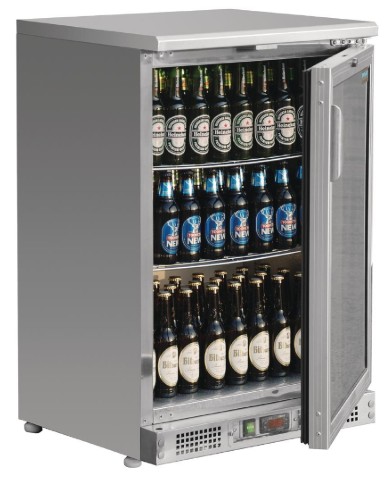
Most wine fridges have hinged glass doors. When the door hangs square, the seal presses evenly against the cabinet all the way round. Over time, though, a door that’s pulled wide open, leaned on or left to swing can drop slightly on its hinges.
A dropped door meets the frame unevenly, so the seal only grips along some of its length and leaves gaps elsewhere. Wear usually appears first at the corners and on the hinge side.
Signs your seal is letting air in
A failing seal shows itself at the door long before it shows in the bottle. Look out for:
- Condensation on the glass. A worn or dirty gasket lets warm air in, which increases condensation on wine cooler doors.
- A fridge that rarely seems to stop running, or a temperature reading that keeps drifting from its setting.
- A door that doesn’t sit flush, springs back open or needs a push to close.
- Splits, flattened sections or gaps, especially at the corners.
- Grime or mould in the folds of the seal, which can hold it away from the frame.
The bottles themselves also give warnings: corks pushed above the rim, dried wine around the capsule or a dropping fill level. By that stage, air has already been getting in for some time.
Is It the Fridge or the Seal?
When a wine fridge stops holding temperature or seems to run constantly, it’s easy to assume the whole unit is reaching the end of its life, but often the seal is to blame.
Before you replace the fridge, check the door. Close it and look for gaps along the edges. Check the seal for damage, and make sure the cabinet is level so the door hangs square. A worn seal is far cheaper to replace than a fridge, and it’s a job you can usually do yourself.
If the seal is in good condition and the problems continue, that’s the point to have the unit itself looked at.
Keeping the Seal Working, at Home and Behind the Bar
A wine fridge at home might be opened a few times a week. One behind a bar or in a restaurant may be opened dozens of times a night during service, often in a hurry, and sometimes left ajar while a bottle is poured. That traffic wears seals faster and gives warm air more chances to get in.
A few habits help in either setting:
- Clean the seal regularly. Wipe it with mild soapy water, get into the folds, then dry it thoroughly.
- Open the door fully before removing shelves. A shelf pulled out past a half-open door can catch the seal and tear it.
- Keep bottles back from the door line, so nothing stops the door closing fully.
- Check doors after service. Make a quick check part of closing up, and shut any door that hasn’t sealed.
- Don’t prop the door open while refilling. Load in batches and close it between them.
- Keep the cabinet level, and get hinges adjusted if a door has dropped. A new seal can’t grip evenly on a door that hangs out of line.
Choosing a Replacement Seal
A replacement seal needs to match three things.
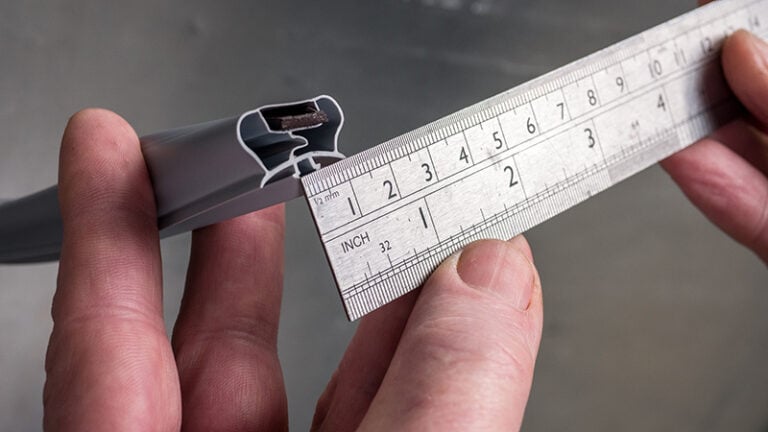
- The profile. The shape of the seal in cross-section varies between manufacturers and models, so the new seal has to match the original.
- The fixing. Lift the edge of your seal gently and look underneath:
- The size. A seal that’s even slightly too long ripples, and one that’s too short stretches and pulls away at the corners.
Seals bought by the metre and cut to length rarely meet cleanly at the joins. That’s why every seal we make is a complete, fully welded seal, made to order to your exact door size. We match it to one of around 150 profiles, which include all the major branded seals as well as custom seals.
Find your fridge’s model number (usually on a label inside the cabinet or in the manual), then measure your door. Our video shows you how:
Not sure which seal you need? Send us a photo using our Seal Photo ID service, or contact our team with your model number and measurements.
Fitting Your New Seal
Changing a wine fridge seal is a straightforward DIY job, and our step-by-step guide to replacing your fridge door seal walks you through it.
Next-day delivery is available on our glass door seals, so your wine isn’t left in a leaking fridge for longer than it needs to be. As Linda Dagcilar found, we’ll help you find the right seal and get it to you fast.

Protect the Cork by Protecting the Door
The door seal is one of the cheapest parts of a wine fridge, but it does a lot to protect what’s inside. A few seconds spent checking it now could save bottles you’ve been looking forward to opening for years.
If yours is starting to wear, get in touch with your model number and door measurements, and we will help you find the right replacement.