If you own a Weald wine cooler or bottle cooler, you already know the quality and precision that goes into Weald refrigeration equipment. Their fridges are tailored to fit your specific space and needs.
However, as Weald Refrigeration closes its doors, you may be wondering where to source seals and ongoing support for your Weald fridges. Thankfully, the answer is straightforward. The Seal Company has been the OEM supplier of seals to Weald since 2021, and we continue to support Weald equipment owners.
This guide explains everything you need to know about Weald seals, how to identify when replacement is needed, and how to source the right seal to keep your equipment running reliably.
Brand Overview
Weald Refrigeration specialised in manufacturing bespoke refrigerated back bar cabinets, wine coolers, and bottle coolers. Their equipment is found in various high-end venues including luxury five-star hotels, fine dining establishments, and premium retail environments. Every unit is tailored to the customer’s exact specifications.
As Weald closes operations, we want to ensure their customers have uninterrupted access to the parts and support they need. Our relationship as Weald’s OEM supplier enables The Seal Company to help businesses continue to maintain their Weald fridges.
Our OEM Partnership with Weald
The Seal Company has been Weald’s Original Equipment Manufacturer (OEM) supplier since 2021. This means we manufacture seals for Weald on two fronts:
- During manufacturing: When Weald builds a new unit, orders for bespoke seals are forwarded directly to us. We manufacture these seals in our factory and supply them to Weald’s customers, ensuring every new unit leaves with the exact seal specifications it requires.
- After sale: When existing Weald customers need seal replacements, Weald forwards those orders to us as well. We handle the manufacturing and dispatch directly to the end user, maintaining the same quality standards and delivery speed.
This dual partnership has allowed us to build deep expertise in Weald’s specifications and bespoke manufacturing processes. We understand their engineering precision because we’ve been part of it. As Weald closes operations, this longstanding relationship means we’re uniquely positioned to continue supporting their customers with the same quality seals, often with next-day delivery.
Weald Seal Profiles and Where to Find Them
Weald refrigeration equipment uses a single seal profile across its range: TSC-2011-D. This seal profile can be applied to all Weald units, regardless of model or capacity.
Unlike standard commercial refrigeration where the same model number uses identical seals, Weald customers often have custom-sized cavities built to fit their specific installation. Ordering a custom seal means seals are made based on your unit’s exact measurements. Orders placed before 12 pm are manufactured and dispatched the same day for next-day delivery.
As Gary M testifies in his review below, our TSC-2011-D seals are perfect for meeting Weald’s bespoke dimensions:

Before Weald’s closure, customers could source seals either directly from the manufacturer or through Weald. As Weald winds down operations, The Seal Company is the established source for replacements, due to its longstanding relationship as Weald’s OEM supplier.
Why Weald Cooler Seals Wear
Thermal cycling is the primary cause of seal degradation in wine and bottle coolers. Each time the compressor cycles on and off, the seal experiences temperature fluctuations between the cold interior and ambient room temperature. Over time, this repeated stress causes the rubber to lose elasticity and develop small gaps.
Seals also accumulate condensation and moisture in their folds, particularly in humid environments. This moisture retention can encourage mould growth and accelerate rubber degradation. Dust and debris from the surrounding air can also settle in the seal folds, compromising the fit.
For Weald equipment kept in hospitality environments such as hotels and restaurants, seals may face additional stress from high intensity use, frequent door cycles, and exposure to kitchen heat and moisture.
Regular inspection and timely replacement keep your Weald unit operating at peak efficiency, maintain temperature stability, and protect the quality of stored beverages. This not only saves energy, but keeps your business protected during EHO (Environmental Health Officer) compliance audits.
Troubleshooting: Common Weald Seal Issues
Your Weald seal may require attention if any of these symptoms indicating that you should replace the seal begin to show. The table below explains what you can do to fix several common issues:
| Problem | What It Indicates |
| Temperature fluctuations or unit running constantly | Worn seal losing elasticity. Small gaps form around the perimeter, allowing warm air to leak in. The compressor works harder to maintain temperature. |
| Visible frost or condensation around the door frame | Seal failure. Warm air enters the cold interior, condenses, and may freeze or pool on the frame. Replacement is needed if you cannot stop frost forming despite regular cleaning. |
| Visible gaps, cracks, or tears in the gasket | Physical seal damage. If you spot splits, hardened/brittle rubber, or sections not sitting flush against the frame, replacement is needed. |
| Door pops open slightly or feels loose, like it’s not sealing correctly | Compressed or worn seal that’s lost its grip. Test with the paper method: close the door on a sheet of paper and try to pull it out. If it slides free with minimal resistance, the seal needs replacing. |
| Mould or black spots on the gasket | Moisture retention and food safety risk. While surface cleaning may help, repeated mould indicates a wider issue and the seal should likely be replaced. |
Identifying and Measuring Your Weald Seal
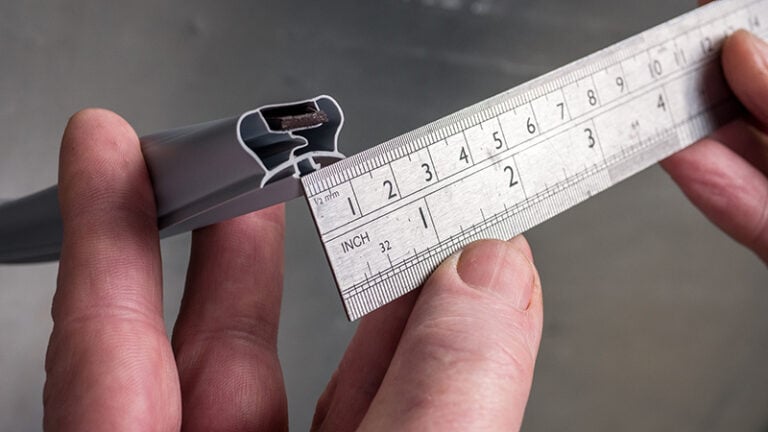
Because Weald equipment is bespoke-built, the best way to identify your seal is by measuring the outside edges of the seal itself.
Suggested steps:
- Check for any documentation. If you have original paperwork or a datasheet from your Weald unit, it may include the seal’s dimensions.
- Measure from the outside edges of the seal. You can do this in two ways:
- While the seal is on the door (recommended): measure its width and height in millimetres at multiple points (top, middle, bottom) from the outer edges of the seal to account for any variation.
- After removal: remove the seal from the door and measure the outside edges flat.
- Check corner details. Note whether the corners are square or rounded, and measure the corner radius if they’re rounded. This detail affects seal fit. Be careful not to assume every corner has the same radius.
Once you have your seal’s measurements, browse our Weald seal range to see if there’s a match. If your dimensions are non-standard, we can provide a bespoke quote.
Replacing a Weald Seal
There are some cases in which you may be able to repair your cooler’s seal yourself. For food safety and energy efficiency reasons, however, most businesses tend to benefit more from replacing their seals. The replacement process tends to be straightforward and quick.
You can follow the process outlined below, and watch our video replacement guide for in-depth visual instructions.
Step by step:
- Step 1: Prepare
- Lay the new seal flat for a few hours to remove kinks. A warm, hairdryer-softened seal fits more easily.
- Switch off the unit and allow it to warm to room temperature, as cold seals tear easily.
- Step 2: Remove Old Seal
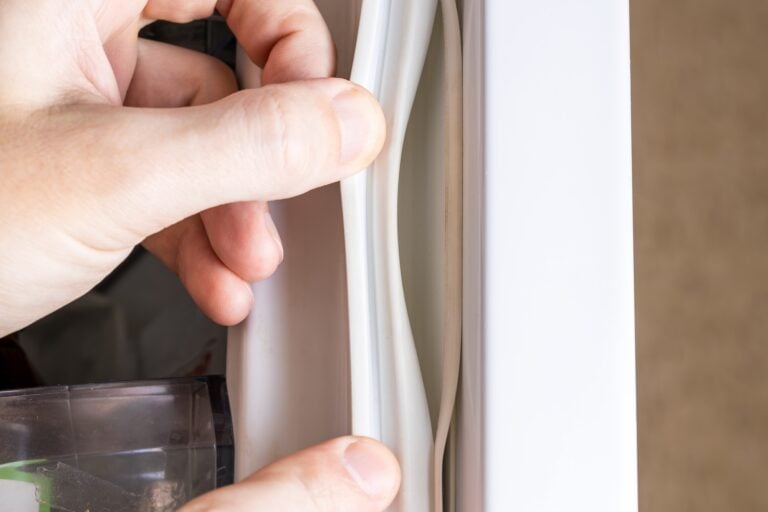
- Start at a corner and slowly pull the seal from the groove or channel. Work carefully to avoid damaging the cavity walls.
- Step 3: Clean the Groove
- Wipe the cavity with mild detergent and dry thoroughly. Remove any mould, debris, or residue.
- File smooth any burrs or sharp edges.
- Step 4: Fit the New Seal
- Anchor the corners first, then work along the edges. Use steady, even pressure and watch out not to overstretch.
- Use a blunt tool or knuckle to press stubborn areas, moving carefully to avoid causing damage.
- Step 5: Test
- Close the door and check for gaps or wrinkles.
- If gaps remain, you can try using a hairdryer to help:
- When you are done, perform the paper test: close the door on a sheet of paper and try to pull it out. If it grips firmly, the seal is properly fitted. If it slides free, reseat the seal.
- Aftercare
- Clean regularly with mild detergent to stop mould from growing.
- Schedule in regular maintenance
- Check regularly that the seal remains sufficiently snug.
When to Call a Technician
Most seal-related problems can be solved without professional help, but some situations warrant expert assessment.
Call a technician if the door won’t close properly or remains misaligned after seal replacement. This suggests hinge damage or door frame warping, neither of which a new seal alone will fix.
If the fridge’s temperature won’t stabilise despite installing a new, correctly fitted seal, the problem may lie with a failing compressor, thermostat malfunction, or airflow obstruction. These are mechanical issues beyond seal replacement.
If your unit is under warranty, it’s worth being aware that any DIY work could affect warranty coverage.
Why Replacing Your Weald Cooler Seal Matters
A Weald wine cooler or bottle cooler malfunctioning due to a faulty seal can disrupt your business, lead to spoiled stock, and compromise the quality of your beverage collection. In hospitality and retail settings, downtime is costly.
Installing a new seal can often be done within an hour, so it’s typically best not to delay. Weald equipment is precision-engineered to last, but seals are wear items. Recognising the signs of degradation, knowing how to measure accurately, and sourcing a replacement quickly keeps your operation running smoothly.
Even as Weald stops manufacturing new units, The Seal Company provides bespoke, made to order seals for all Weald models, often with next-day delivery. Contact our experts, and we will help you straightforwardly replace your Weald cooler seal.