In a small deli or café, the counter-top fridge rarely gets a rest. It’s opened for every sandwich, drink and top-up, often in a tight space next to a hot coffee machine. On a compact unit, the seal tends to wear faster than on a larger fridge in the back. Once it does, the fridge struggles to hold its temperature.
This guide explains why counter-top commercial fridge seals need replacing more often. It also gives you a simple routine for checking them, and shows how to replace a worn seal yourself before it causes problems during service.
Why Counter-Top Fridge Seals Wear Out Faster
They’re opened all day
A storage fridge in the back might be opened now and then. A counter-top unit at the front is opened with almost every order. Each time, the seal is pressed against the cabinet and released again. Over time, it loses its shape and stops springing back.
Small doors take uneven pressure
In a tight kitchen, doors get pushed shut with a hip, leaned on or knocked by a passing tray. On a hinged door, that weight can pull the door out of line, so the seal presses harder on one side than the other. Wear usually shows first at the corners and on the hinge side. Sliding doors also experience wear, as they’re pushed back and forth during service.
Heat from the counter
Counter-top fridges often sit beside coffee machines, toasters and grills, or are squeezed into gaps with little room around them. Warm air near the door gives a worn seal more to keep out, and the fridge has to work harder to stay cold. Whenever possible, keep the unit away from direct heat and give it the clearance the manufacturer recommends.
Grease and food residue
Crumbs, sauces and grease collect in the folds of the seal. Left there, they hold the seal away from the cabinet and can damage it over time. Harsh cleaning products can do further damage.
A Seal Check Routine for Small Delis and Cafés
There is no single answer to how long a counter-top fridge seal should last. It depends on how often the door is opened, how much heat is around it and how well the seal is cleaned. A busy counter-top unit will need a new seal sooner than a fridge that’s opened a few times a day. That’s why it pays to check it often rather than wait for it to fail.
The good news is that most of these checks fit into routines you already have.
| When | What to Check |
| Every day, at opening and closing | The door closes fully and stays shut. There’s no condensation or frost around the door. The temperature is holding at its setting. |
| Every week, when you clean | Wipe the seal with mild soapy water, get into the folds and dry it thoroughly. Look along its full length for splits, flattened sections or hard patches. |
| Every month | Close the door on a strip of paper at several points around the seal. If the paper slides out easily, the seal isn’t gripping there. Check that hinged doors hang square and sliding doors run smoothly. |
| Keep on file | Your fridge’s model number and door measurements, so you can order a replacement as soon as it’s needed. |
The Food Standards Agency’s Safer Food Better Business advice recommends that you confirm that fridges and chilled display equipment are working properly. For a full cleaning method, see our guide to cleaning fridge door seals.
Signs Your Counter-Top Seal Needs Replacing
Look out for the following symptoms of a failing seal:
- Condensation or frost forming around the door.
- A fridge that seems to run constantly, or a temperature that keeps drifting from its setting.
- A door that springs back open or needs a firm push to close.
- Splits, tears or flattened sections, especially at the corners.
- A seal that has gone hard and won’t sit flat, even after cleaning.
If a thorough clean doesn’t bring the seal back into full contact with the cabinet, it’s likely time to replace it.
Is It the Fridge or the Seal?
When a counter-top fridge stops holding temperature, it’s tempting to assume the unit itself needs to be replaced. Often, however, the door seal is the real problem.
Investigate the seal before you start looking at new fridges. Close the door and look for gaps along the edges, check the seal for damage, and make sure the cabinet is level. A replacement seal costs far less than a new commercial fridge, and fitting it is usually a job your own team can do.
If the seal is in good condition and the problems continue, that’s the time to have the unit itself looked at.
Choosing and Fitting a Replacement Seal
A replacement seal needs to match your old one in three ways:
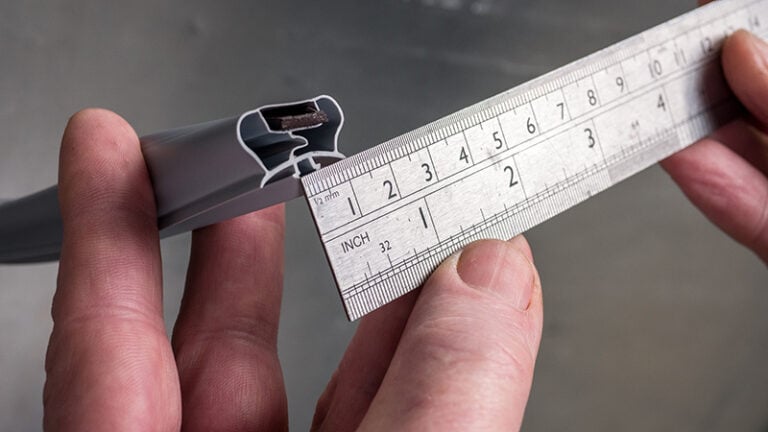
- The profile. The shape of the seal in cross-section varies between manufacturers and models, so the new seal has to match the original.
- The fixing. Lift the edge of your seal gently and look underneath:
- The size. A seal that’s slightly too long will ripple. One that’s too short will stretch and pull away at the corners.
Seal profile bought by the metre and cut to length rarely meets cleanly at the corners, which leaves gaps for warm air to get in. That’s why every seal we make is made to order as a complete seal with welded corners, sized to your exact door. We match it to one of around 150 profiles, which include all the major branded seals, whether your unit has hinged or sliding doors. We also provide custom seals.
Find your fridge’s model number (usually on a label inside the cabinet or in the manual), then measure the door. Our video shows you how:
Not sure which seal you need? Send us a photo using our Seal Photo ID service, or contact our team with your model number and measurements.
Fitting Your New Seal
Replacing a counter-top fridge seal is a straightforward DIY job, and our step-by-step guide to replacing your fridge door seal walks you through it. Next-day delivery is available on all our seals. As customers like Ian confirm, our service ensures your fridge isn’t left struggling for any longer than it needs to be.

If you also run undercounter units, our guide to undercounter fridge seals covers what to look out for there.
Keep Your Counter-Top Fridge Working
On a busy counter, the door seal is a small part doing a big job. A few seconds’ check each day and a proper look each week will tell you when it’s starting to wear before it affects your stock.
If your counter-top fridge seal needs replacing, get in touch with your model number and door measurements, and we will help you find the right seal.