A display fridge in a deli, café or convenience store has to be easy for customers and staff to open, again and again, all day long. It also has to close tightly enough to keep chilled food cold and running costs down.
The door seal is where those two needs meet. Every time a customer opens the door, the seal lets go of the frame. Every time the door closes, the seal has to grip again. On a fridge your customers use all day, that happens far more often than on any fridge behind the counter.
This guide explains why customer-facing fridges are tough on their seals, what a failing seal looks like to the people buying from you, and how to keep busy doors sealing well. It also covers what to look for in a replacement seal that can stand up to heavy use.
Why Customer-Facing Display Fridges Are Harder on Their Seals
A back-of-house fridge is only opened by staff who know to shut the door properly, but a display fridge is opened by everyone. Customers hold the door open while they choose, let it swing, lean on it or knock it with a basket. Plenty of them walk away without checking it has closed.
Each opening lets warm air in, while each closing asks the seal to grip again. The more often that happens, the faster the seal wears and the harder the fridge works to stay cold.
How the seal wears also depends on the type of door.
Hinged doors: a tighter seal, but more strain
On a hinged glass door, the seal runs all the way around the door and presses flat against the cabinet when it closes. When the door hangs square, this gives a tight, even seal.
The weak point is the hinge. When customers pull doors wide open or let them swing shut, the hinges take the strain. Over time, a door can drop slightly. A dropped door meets the frame unevenly, so the seal only grips along part of its length. That’s why wear on hinged doors tends to show first at the corners and on the hinge side.
Sliding doors: easier access, but harder to seal
Sliding doors are popular in narrow aisles and small shops because nothing swings out into customers. The trade-off is the seal. Because sliding doors pass in front of each other, they can’t press against the frame all the way around the way a hinged door does.
On a sliding door, the seal rubs along its contact points every time the door moves, so it wears through friction rather than compression. Sliding doors also rely on a clean track. Grit, crumbs or a dropped bottle cap in the runner can stop a door closing fully, leaving a gap however good the seal is.
What a Failing Seal Looks Like From the Customer’s Side
The seal on a display fridge sits at eye level, often under bright lighting, right next to the products you want people to buy. When it starts to fail, your customers can see it.
Look out for:
- Splits and tears, especially at the corners.
- Grey or black marks in the folds of the seal, where grime and mould collect.
- Sections hanging loose from the door.
- Doors that drift open or bounce back instead of closing.
- Fogged glass that hides your products. Our guide to stopping condensation on glass door display fridges explains how to tell whether the seal is to blame.
- Drinks and chilled food that don’t feel as cold as they should.
A tired, discoloured seal tells customers something about how the rest of your equipment is looked after. It also matters at inspection. When you’re given a food hygiene rating, the officer looks at how food is handled, including temperature control, and at the condition and cleanliness of your premises and facilities.
Temperature is the bigger risk. In England, chilled food must be kept at 8°C or below by law, and the advice is to set fridges to 5°C or below. A seal that lets warm air in makes those limits harder to hold, especially at busy times when the doors are opened most.
If you think your seal is on its way out, our guide explaining the symptoms of a failing seal can help you confirm if a replacement is needed.
Keeping Busy Doors Sealing Well
Customers opening your fridges all day is a good sign for business. A few simple habits can help the seals cope with the extra traffic:
- Check doors after busy periods. Make a quick walk past the fridges part of the routine after a lunchtime rush, and close any door that hasn’t shut properly.
- Don’t prop doors open while restocking. Bring products out in batches and close the door between loads.
- Keep products far away enough from the door. A bottle or packet sitting on the door line can stop it from closing fully.
- Wipe the seals daily. Use warm water and a mild detergent, get into the folds, then dry them. Sticky spills can hold the seal away from the frame and tear it when the door is pulled.
- Keep sliding door tracks clear. Brush out the runners regularly so the doors slide fully shut.
- Check the self-closing doors. If one has stopped closing by itself, get it looked at.
- Watch for dropped doors. If a hinged door no longer lines up with the frame, the hinges may need adjusting before a new seal will grip evenly.
Choosing a Seal That Stands Up to Busy Doors
When a display fridge seal needs replacing, the new one has to cope with the same heavy use that wore out the old one. On a door customers open all day, you need a well-fitted, high-quality seal. Three things make the difference.
Matched to your door type
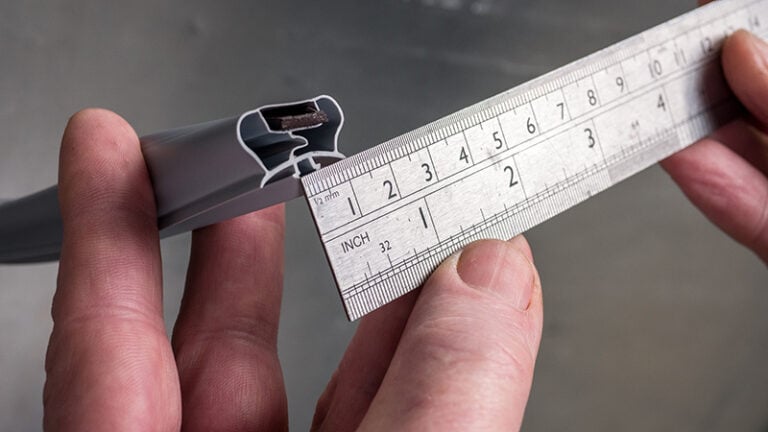
Your new seal has to suit the way your door closes. The profile (the shape of the seal in cross-section) also varies between manufacturers and models, so your replacement needs to match the original.
Fixed securely to the door
Customers pull on display fridge doors all day, so the seal needs to stay firmly attached. The three fixing methods you’re most likely to find are:
- Dart seals, which have an arrow-shaped spine, often called a dart, that pushes into a channel around the door.
- Flap seals, which have a flat flap on the back that sits trapped between the door liner and the door.
- Lip seals, which work like flap seals but are held in place by a specially designed retainer for a more secure fixing.
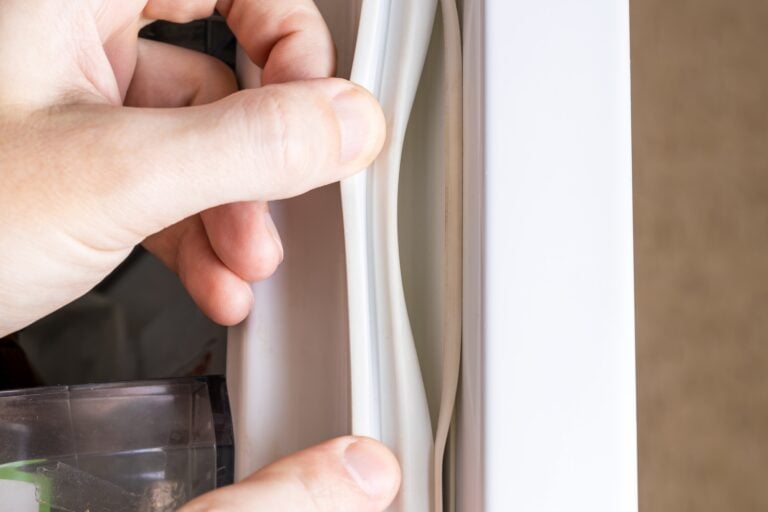
To check yours, gently lift the edge of the seal and look underneath:
- If it’s pressed into a channel, it’s likely a dart seal.
- If a flat flap tucks behind the door liner, it’s likely a flap seal.
- If the flap is held by a separate retaining strip, it may be a lip seal.
A replacement with the same fixing as the original will sit securely in place, so it holds firm as the door is opened and closed.
Made to the exact size, with welded corners
On a busy door, the corners take the most strain. A seal that’s slightly too long bunches and ripples, and one that’s slightly too short gets stretched and pulls away at the corners. Either way, small gaps appear and grow quickly with every opening.
Seal profile bought by the metre has the same problem. When you cut the lengths yourself, the corners rarely meet cleanly, and warm air gets straight in. That’s why every seal we make is a complete, fully welded seal, made to order to fit your exact door size. We match your seal to one of our 150+ profiles, which include all the major branded seals as well as custom seals.
Finding your replacement
Start with your fridge’s model number, which you’ll usually find on the label inside the cabinet or in the manual. Then measure your door. Our video shows you exactly how:
If you’re not sure which seal you need, send us a photo using our Seal Photo ID service, or contact our team with your model number and measurements.
Replacing a Display Fridge Seal Yourself
Replacing a display fridge seal is typically a straightforward DIY job. Our step-by-step guide to changing your fridge door seal walks you through it.
Next-day delivery is available on our glass door seals, so a failing seal doesn’t have to mean days of warm drinks and fogged glass. As our customers can testify, we specialise in getting the right seal to you quickly and in perfect condition.

Accessibility and Efficiency Can Work Together
A display fridge should be easy for customers to use and tight enough to keep food safe and running costs down. A good seal, fitted to the exact size and regularly maintained with a few simple habits, lets it do both.
If your seal is showing signs of wear, get in touch with your model number and door measurements. We’ll help you find the right seal for your unit so your products can stand out.