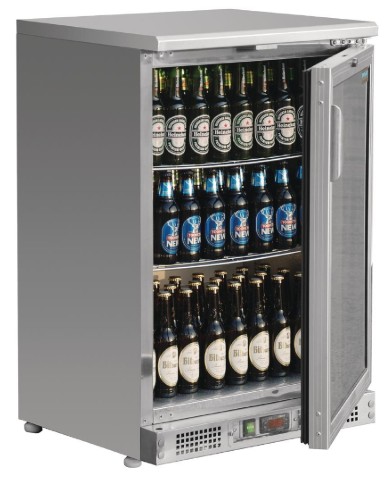
A glass door display fridge has two jobs: to keep your products cold, and to show them off. When the glass fogs up, it fails at the second one. Customers can’t see what’s inside, and staff end up wiping the doors through every shift.
The good news is that condensation is a symptom, not a fault in itself. Where it forms tells you what’s causing it. Moisture on the outside of the glass usually points to the room. Moisture on the inside, or around the door edges, usually means warm air is getting into the fridge.
This guide shows you how to read the condensation, check the likely causes and fix the problem for good.
Why Display Fridge Glass Fogs Up
Condensation forms when warm air meets a cold surface. Warm air holds more moisture than cold air, so when it cools against something cold, that moisture turns into water droplets. The temperature at which this happens is called the dew point.
On a display fridge, the glass is the coldest surface your customers see. On a day with high humidity (such as from rain-soaked coats, coffee machines or a nearby kitchen) it doesn’t take much for the glass to drop below the dew point.
Diagnosing Your Condensation Problem: Inside, Outside or Around the Edges?
Before you can fix condensation, you have to look at where it is forming. Each location points to a different cause:
- On the outside of the glass
- On the inside of the glass
- Around the door edges and frame
- Inside the fridge with the door shut
If you’re finding water pooling in the bottom of the cabinet rather than fog on the glass, that’s usually a separate issue, such as a blocked defrost drain. Our guide to why there’s water in your fridge can help resolve this issue.
Fog on the Outside of the Glass
Condensation on the outside of the door is usually caused by the room, rather than by the fridge itself. The fridge is keeping cold air in as it should, but the air around it is simply warm and humid enough to condense on the cold glass.
Common triggers include:
- Wet weather
- Heating
- Steam from coffee machines or dishwashers
- Direct sunlight
- Draughts from an entrance door
This type of condensation often comes and goes with the weather or with busy trading periods. If this matches what you’re seeing, skip ahead to Fixing Room and Usage Causes.
Condensation On the Inside of the Glass
Condensation on the inside means warm, moist air is getting into the cabinet.
Common causes include:
- A door that isn’t closing or sliding fully shut after customers or employees open it
- A worn or damaged door seal
- Products pressed against the glass, blocking airflow
- Warm products loaded straight into the fridge
Around the Door Edges and Frame
Moisture or frost that gathers along one part of the door edge usually points to a gap in the seal at that spot. Check the corners and along the base first, as these are where door gaskets tend to fail first.
Inside the Fridge With the Door Shut
If condensation keeps forming inside even when the door has been closed for a while, warm air is getting in when it shouldn’t. This is the strongest sign that your door seal isn’t doing its job.
A Five-Minute Fridge Seal Check
- Note where the condensation forms and when it appears.
- Do the paper test. Close the door on a sheet of paper and pull it out. If it slides out easily, the seal isn’t gripping at that point. Repeat this at several points, including the corners.
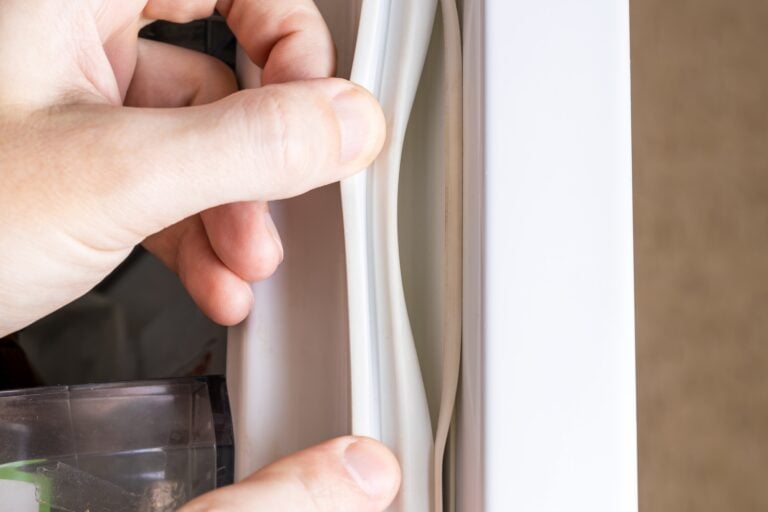
- Inspect the seal for cracks, splits, hardened sections or areas pulling away from the door.
- Press the seal gently. It should spring back. If it stays flat, it’s no longer sealing properly.
- Check the door hangs square and closes or slides fully shut. A door that has dropped meets the frame at an angle, so the seal only grips along part of its length.
- Check the temperature with a thermometer and compare it to the right temperature for your fridge.
It is important to maintain the correct temperature in your refrigerator. A fridge that keeps letting in warm air works harder, costs more to run and can struggle to hold food at a safe temperature. Chilled food must be kept at 8°C or below by law in the UK. A fridge that can’t manage that becomes a food safety inspection issue. For a deeper look at the business risks that condensation can cause, see our guide to preventing cold room condensation.
What to Do When Your Fridge Door Seal Is Failing
If your checks point to the seal, replacing it is usually the most effective fix. A seal that’s simply dirty may recover with a thorough clean. However, one that’s cracked, hardened or no longer gripping will not.
The corners of a seal take the most wear, and they’re also where a poorly made seal fails first. Seal profile bought by the metre and cut to fit by hand rarely meets cleanly at the corners. That leaves small gaps where warm air gets in. That’s why The Seal Company doesn’t sell seals by the metre. Every seal we make is a complete, fully welded seal, made to order to match the exact size of your door. We match your seal to one of our 150+ profiles, which include all the major branded seals as well as custom seals. We make seals for both hinged and sliding glass doors.
Identifying and Fitting Your Seal Yourself
To find the right replacement seal, start with the model number from your fridge’s documentation. Then measure your door. If you’re not sure which profile you need, send us a photo using our Seal Photo ID service, or contact our team with your model number and measurements. You can also watch our video guide on how to easily identify your fridge seal:
We can often offer next-day delivery. Once your seal arrives, fitting it is a straightforward DIY job. Our step-by-step guide to changing your fridge door seal walks you through it.
As customers like George Dadd testify, The Seal Company are here to make preventing condensation and maintaining your fridge seals easy and efficient:

Fixing Room and Usage Causes
If the condensation is on the outside of the glass, or your seal checks out fine, focus on the room and how the fridge is used:
- Reduce humidity. Improve ventilation or use a dehumidifier, especially in small cafés or shops with steam sources.
- Position the fridge carefully. Keep it away from coffee machines, ovens, dishwashers, air vents, direct sunlight and entrance doors.
- Keep it ventilated. Leave the clearance the manufacturer recommends around the unit, and keep the condenser coils free of dust and grease.
- Leave space inside. Keep products off the glass so cold air can circulate.
- Cool before loading. Let warm products cool before they go into the fridge.
- Check the setting. Running the fridge colder than it needs to be makes the glass colder too. Keep it within safe limits, but no lower than necessary.
- Close doors properly. Make checking that doors are fully shut part of your staff routine, especially after customers have browsed.
Why Quick Fixes Like Anti-Fog Sprays Don’t Last
Search for condensation fixes and you’ll find plenty of household tips: anti-fog sprays, vinegar, washing-up liquid, even bowls of salt. Unfortunately, these are designed for windows and windscreens, and won’t effectively solve the problem on a commercial display fridge.
At best, a coating on the outside of the glass hides the fog for a while. It does nothing about condensation inside the cabinet, which is the type that points to a fault. Some products can also leave a residue on glass that sits next to food, and harsh cleaners can damage door gaskets over time.
Wiping and coating can treat the symptom, but fixing the cause is the only way to keep the glass clear.
If your checks point to the door seal, we can help. We make bespoke, fully welded seals to order for glass door display fridges, undercounter units and other commercial refrigeration models. Get in touch with your model number and door measurements, and we’ll help you find the right seal for your unit.